
Reviewed · HIKING & TREKKING
Luang Prabang: 3-Day Cultural Remote Trek With Homestay
Remote Laos begins with a river crossing and a footpath used by villagers, not tour buses. This three-day trek takes you through jungle, rice paddies, and mountain valleys to Hmong and Khmu homes where you sleep simply and eat with local families. I love the rare contact with village life and the chance to walk trails that connect working farms rather than sightseeing stops. The big consideration is comfort: toilets and washing facilities are basic, electricity is limited, and rain can make the walking harder.
I also like the small-group or private format, since a good guide can explain plants, farming, customs, and village life as you go. Guides named Aroun and Chan have led this route, and their cultural background can add much to the experience. At $360 per person, this is not a cheap three-day outing, but transport, meals, permits, village fees, boat crossings, guiding, and homestays are included.
Key points to know before you go
- Two remote village settings: Spend nights in Hmong and mixed Hmong and Khmu communities far from Luang Prabang’s tourist center.
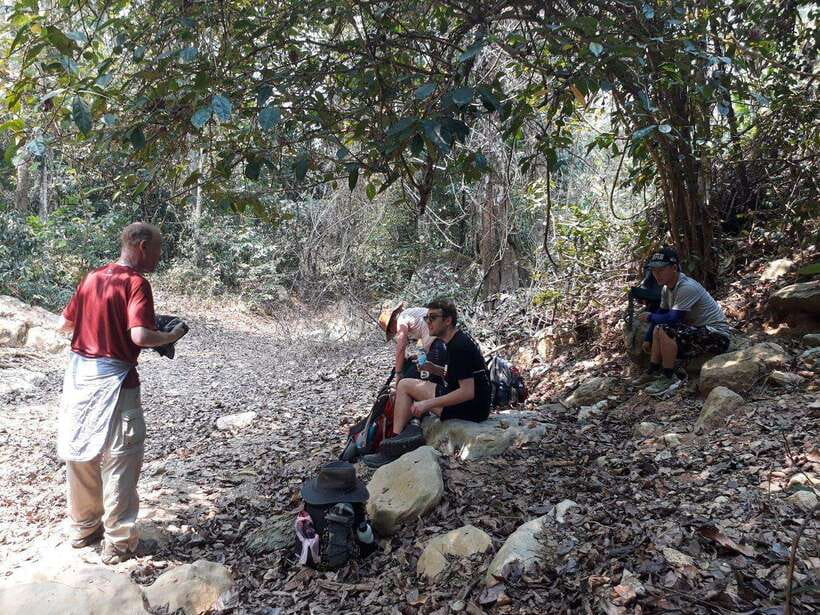
- A real walking route: Expect four to seven hours of medium-grade hiking each day, including steep sections on the final day.
- Simple homestays: Sleeping arrangements are comfortable but basic, with no normal hotel facilities and no reliable place to charge batteries.
- A strong cultural focus: Visit schools, homes, rice farms, and village spaces while your guide explains daily life.
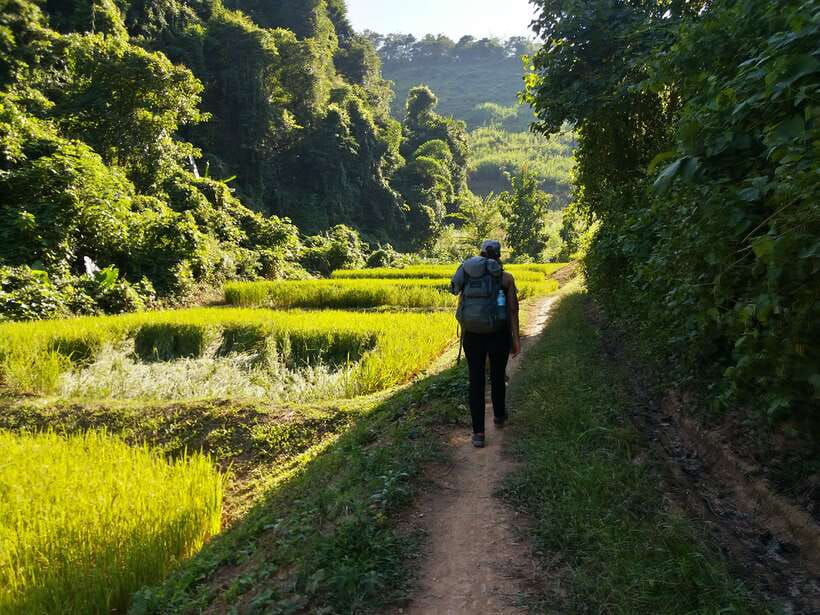
- Three kinds of scenery: Follow rivers, cross jungle trails, pass rice paddies, and climb to broad views from mountain tops.
- A practical finish: End beside the Nam Xeuang River, where you may have time for a swim before returning to Luang Prabang.
What this three-day trek is really about
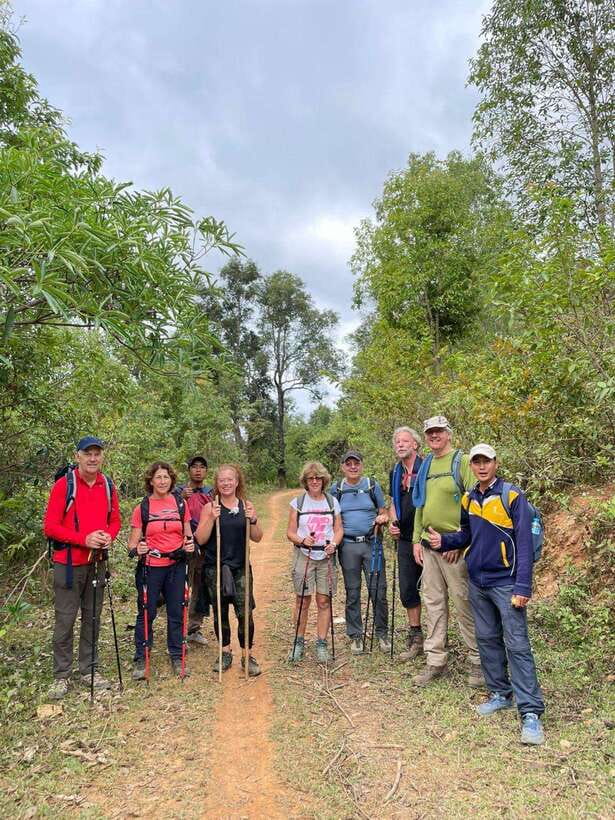
This is not a soft-edged countryside tour with a short walk and a polished lodge at the end. It is a physical and cultural trip into remote northern Laos, where the villages are the main attraction and the walking is the way you reach them.
You leave Luang Prabang by road, travel north beside the Mekong and then the Nam Xeuang River, and cross the river by local boat. From there, the route goes straight into the jungle on paths used by villagers moving between settlements. That detail matters. You are not simply walking around a village built for sightseeing. You are following practical routes tied to farming, family life, and mountain travel.
The route covers three days, with about four to five hours of walking on the first day, four hours on the second, and six to seven hours on the third. Those times describe walking time, not the full length of each day. You should allow for pauses, village visits, meals, and the slower pace that comes with rough trails and wet weather.
The tour can be arranged as a private trip or a small-group experience. That gives you a better chance to ask questions and adjust the pace than you would have on a large coach excursion. An English speaking guide is included. Guides such as Aroun and Chan have been praised for explaining Hmong and Khmu customs, plants, animals, rituals, and farming practices in a clear way.
A few more Luang Prabang trips to weigh up
- Luang Prabang to Nong Khiaw: River Cruise, Hike & Waterfall
★ 4.4 · 53 reviews - Full Day Trek to Kuang Si Waterfalls, Remote Village
★ 5.0 · 38 reviews - Luang Prabang: Full Day Trek to Kuang Si Waterfall & Village
★ 4.6 · 20 reviews
Day 1: From Luang Prabang to a Hmong homestay
You meet at the Tiger Trail Travel office near Villa Maly. The listed meeting time is 8:20 a.m. for an 8:45 departure, and hotel pickup is available if you prefer not to find the office yourself.
Use the morning to pack carefully. You can leave extra luggage behind and carry only what you need for three days. This is one of those trips where a lighter bag directly improves your day. Bring a change of clothes, comfortable walking shoes, water shoes, insect repellent, and clothing suited to the weather.
The drive north takes about an hour and a half. You follow the Mekong, then the Nam Xeuang River, before reaching the crossing point. The boat ride is part of the transition from town to the remote villages. Once you step ashore, the road is finished and the route becomes a trail.
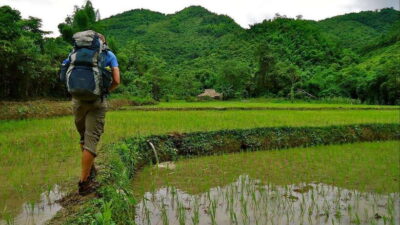
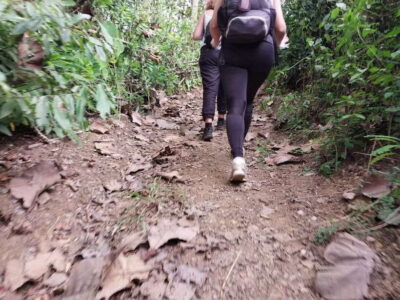
The first walk takes four to five hours through rice paddies and jungle. It is described as medium grade, but that does not mean effortless. Heat, humidity, mud, slippery ground, and uneven surfaces can make a moderate route feel demanding. During the rainy season, the trek takes longer and needs more care.
The rice paddies give you a useful view of how mountain communities work with difficult land. The jungle sections feel more secluded, while the village paths show that this is a living route rather than a marked park trail. Your guide is important here, not just for direction but for explaining the plants, farms, and local routines you pass.
You spend the night in a Hmong village. The homestay is basic but intended to be comfortable. Expect village conditions rather than hotel standards. Electricity is not available for ordinary battery charging throughout the trip, though one account of the experience noted solar panels in a village. You should still assume that your phone and camera may run out of power.
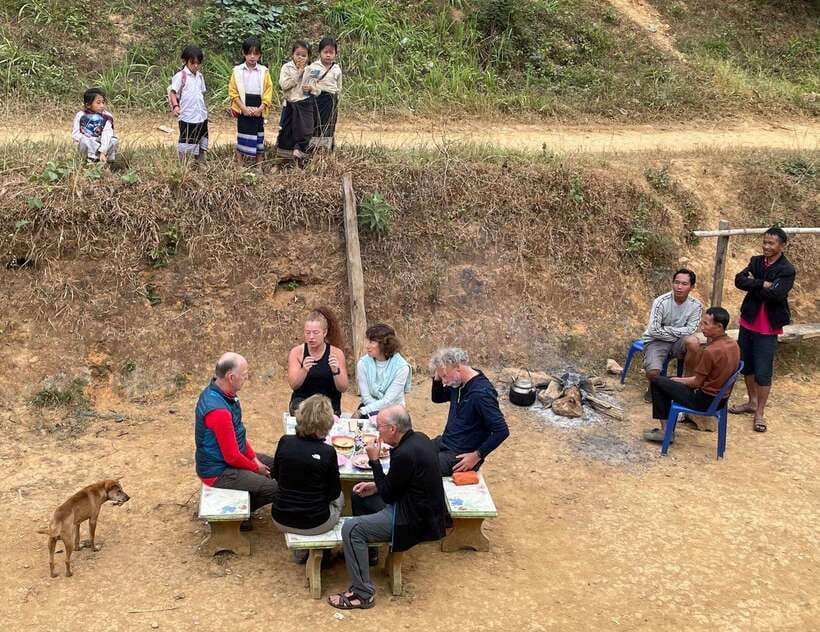
Dinner is prepared by your guide and a local Hmong family. This shared meal is one of the most personal parts of the trip. It gives you time to meet the people who host you and see how an evening unfolds away from Luang Prabang. Specialty drinks are not included, so budget separately if you want anything beyond the stated meals.
Day 2: Valley streams and a larger Hmong and Khmu village
The second morning begins with the sounds of village life and breakfast prepared by your guide. The route is shorter than the other two days, at about four hours, but it still takes place on foot through a remote setting.
You follow valley streams toward a large village surrounded by mountains. The community includes both Hmong and Khmu residents, which gives the day a wider cultural focus than a single-village visit. Your guide can help explain differences in customs and daily routines, while also keeping the visit respectful and easy to follow.
You arrive in the middle of the afternoon. That timing is useful because it leaves room to walk around rather than simply arrive, eat, and sleep. You can see the village school, homes, and the way farmland fits into the valley. The tour description does not promise a formal performance or staged activity. The value comes from observing ordinary places and asking questions through your guide.
The village may feel strikingly simple by hotel standards. Washing and toilet facilities are basic, and modern services are limited. That is not a small footnote. If you need private bathrooms, dependable hot water, air conditioning, or a place to recharge every device, this trip will test your patience.
For me, that simplicity is also the point. A short stay lets you understand the practical side of rural life in a way that a quick photo stop cannot. You see how homes, schools, farms, and community spaces fit together. One past participant joined a Khmu New Year celebration during a stay over New Year, sharing food, drinking Lao Lao whiskey and Beerlao, playing music, and dancing with the community. That kind of invitation cannot be promised, but it shows the sort of contact that can happen when you spend the night rather than pass through.
The evening is meant to be relaxed before the hardest walk. Take care of your feet, drink water, and set out your clothing for the next morning. There is no need to plan entertainment. Village life supplies its own rhythm.
Day 3: Mountain tops, rice fields, and the Nam Xeuang River
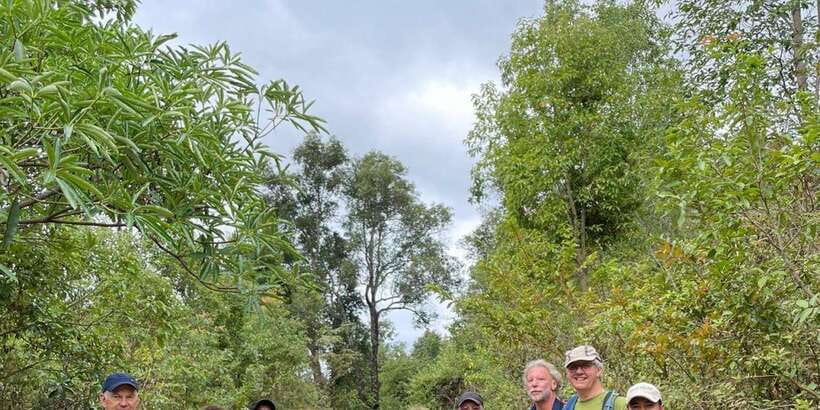
The final day is the physical high point of the tour. You walk for six to seven hours toward mountain tops with wide views over the villages and remote Lao scenery.
This route uses the paths villagers take to tend steep mountain rice fields and visit a Hmong mountain village. The practical purpose of the trails makes the walk more meaningful than a simple viewpoint hike. You are seeing the connection between the slopes and the food, work, and travel of the communities below.
The climb can be demanding. A past participant described some sections as tough in temperatures reaching 37 degrees Celsius, even while calling the tracks manageable overall. That is a useful warning. Your fitness does not need to be that of a serious mountaineer, but you should be comfortable walking for most of a day on uneven ground, including uphill and downhill sections.
The reward is the view from above. From the mountain tops, you look over villages, valleys, and the wide, remote scenery of northern Laos. This is the kind of view you earn slowly, one step at a time. It also gives you a clearer sense of the distances people cover to farm, visit neighbors, and reach surrounding settlements.
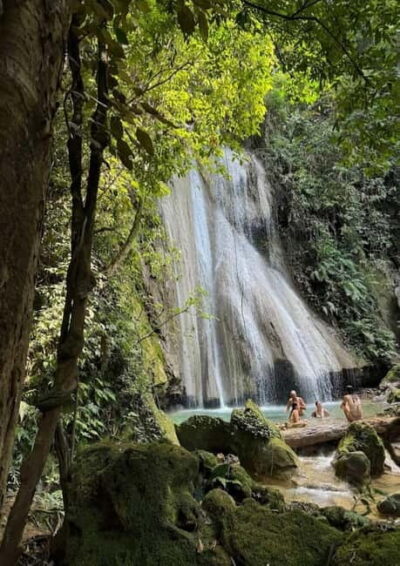
The descent leads to the Nam Xeuang River, where the trek ends. If conditions allow, you can take a well-earned swim before the return journey. Bring water shoes because they are specifically recommended, and keep a dry change of clothes available.
The drive back to Luang Prabang takes about an hour and a half. Hotel return is available when pickup has been arranged. By then, you will probably appreciate the air conditioning, a proper shower, and a bed with a mattress that does not require negotiation.
Same river towns, a completely different day out:
- Luang Prabang: Cruise to Pak Ou Caves & Kuang Si Waterfalls
★ 5.0 · 1,769 reviews - Luang Prabang: Cruise to Pak Ou Caves & Kuang Si Waterfalls
★ 4.8 · 1,360 reviews - Half Day Mekong Cruise to Pak Ou Caves (Morning / Afternoon)
★ 4.6 · 290 reviews - Luang Prabang: UNESCO World Heritage City Highlights Tour
★ 4.6 · 201 reviews
The homestay: valuable, simple, and not for everyone
The homestays are a central reason to book this trip, but they also create the clearest comfort trade-off. Accommodation is described as homestay-type, with basic but comfortable conditions. You should read that as clean enough for a short village stay, not as a small guesthouse with a full range of facilities.
There is no electricity for charging camera batteries during the trip. A solar panel may supply limited village power, but you should not count on it for personal devices. Charge everything before departure and consider carrying a power bank.
The remote setting also affects washing and toilet facilities. They are simple, and the tour is not suitable for people with mobility impairments. Pregnant women should not book it. The long walking days, uneven trails, and limited facilities make those restrictions sensible.
Pack light, but pack smart:
- Comfortable shoes with a secure grip
- Water shoes for the river
- Insect repellent
- A full change of clothes
- Clothing suited to hot, wet, or cooler mountain conditions
- A small personal wash kit
- A charged phone and camera, plus a power bank if you have one
Rain does not cancel the outing. The tour runs rain or shine, and wet weather can make the route slower and more challenging. Good footwear and weather-ready clothing matter more here than stylish trekking gear.
Why the guide can make or break the experience
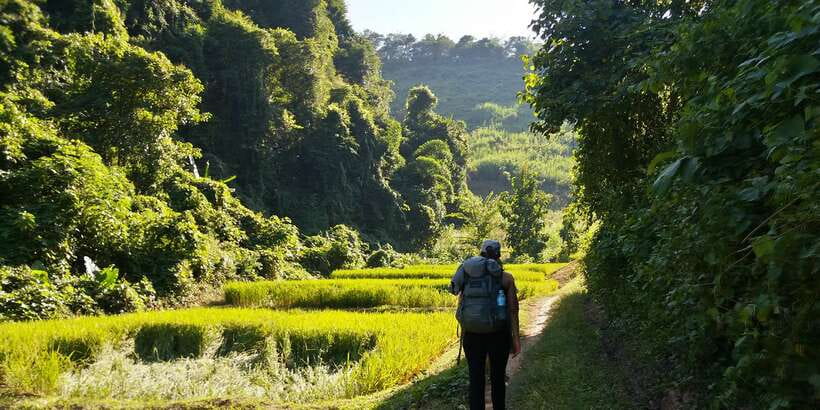
The guide is your link to the communities, and the cultural side of the trip depends heavily on clear explanation. Aroun and Chan are named guides associated with this route. Aroun has been described as especially helpful in explaining nature and culture, while Chan has been credited with explaining hill-tribe customs, rituals, plants, and animals.
Those details are worth considering when you book. Ask the operator who is guiding your departure if a specific guide matters to you, since names and availability can change. The guide also helps you behave well in homes, schools, and villages where visitors are uncommon.
The route has reportedly seen very few outside visitors at some times of year. One stay over New Year involved only two visitors to the villages across a two-month period. That level of isolation is a major attraction, but it also places a duty on you. Listen, ask before taking photographs, and follow your guide’s lead during meals and community visits.
What $360 includes, and what it does not
The price is $360 per person for three days. Included are transport, boat crossings, all meals described in the schedule, an English speaking guide, taxes, village fees, permits, and homestay accommodation.
That package is important when judging value. You are paying not only for walking but also for the logistics of reaching remote communities. Road transport, river crossings, local permissions, village fees, food, guiding, and overnight stays are bundled together. Arranging those pieces independently would be difficult, particularly when the route uses local trails and homes rather than standard tourism facilities.
Specialty drinks are not included. Carry some spending money if you want extra drinks, but there is no need to plan for major add-on costs based on the information provided.
The price is good value for someone who wants a remote cultural trip and accepts basic accommodation. It is poor value for someone mainly seeking comfort or a low-effort nature outing. The trip earns its cost through access and local contact, not through luxury.
Free cancellation is available up to 24 hours before departure, and you can reserve now and pay later. Those terms help if your Luang Prabang plans are still shifting, but the more important choice is deciding honestly if you are ready for three days without normal hotel conveniences.
Who should book this trek
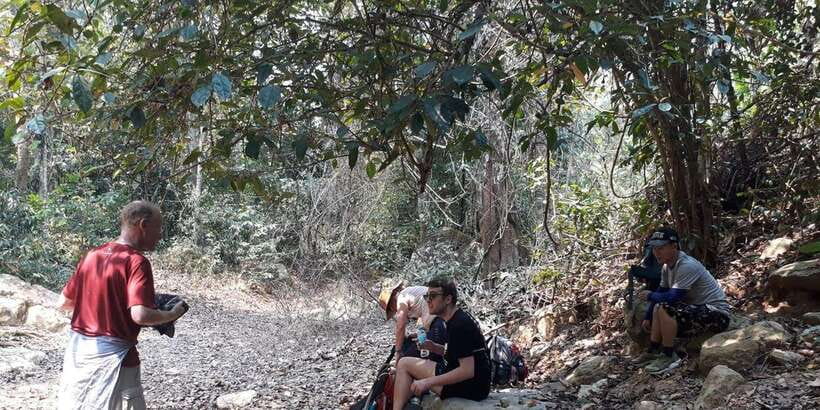
I would recommend it to you if you enjoy walking, want time with local communities, and care more about direct contact than polished facilities. It suits people who are curious about Hmong and Khmu life, willing to eat with host families, and happy to let the guide set the rhythm of the day.
It also suits fit couples, friends, and small private groups who want a quieter route away from the usual Luang Prabang day trips. The strongest parts are the remote trails, the overnight stays, the guide’s cultural explanations, and the chance to see villages as working communities.
I would not choose it for a first outdoor trip if you dislike heat, mud, long walks, or steep ground. It is also a poor match if you need dependable electricity, private washing facilities, or hotel-level sleep. Rain can slow the route, and the final day is long.
Should you book the Luang Prabang remote trek?
Book it if your idea of a good trip includes a village dinner, a basic homestay, a river crossing, and a long climb for a mountain view. The experience offers something Luang Prabang’s temples and cafes cannot: time in remote Hmong and Khmu communities, with enough walking and overnight contact to make the visit feel connected to real daily life.
Skip it if you want comfort, short walks, or a guaranteed dry-weather schedule. For everyone else, $360 is a fair price for three days of transport, guiding, food, permits, village access, and a genuinely remote route. Pack light, charge your batteries, protect your feet, and come ready for simple living.
FAQ
How long is the Luang Prabang remote trek?
The experience lasts three days. Walking takes about four to five hours on day one, four hours on day two, and six to seven hours on day three.
Where does the tour meet?
You meet at the Tiger Trail Travel office on the same street as Villa Maly hotel. The listed meeting time is 8:20 a.m. for an 8:45 a.m. departure.
Are meals and transport included?
Yes. Transportation, boat crossings, all meals described in the schedule, village fees, permits, taxes, an English speaking guide, and homestay-type accommodation are included.
What are the overnight stays like?
You stay in welcoming village homestays with basic but comfortable conditions. Washing and toilet facilities are simple, and you should not expect normal hotel services.
Is electricity available during the trek?
There is no electricity for charging camera batteries during the trip. Charge your devices before leaving Luang Prabang and bring a power bank if needed.
Can I cancel or pay later?
You can cancel up to 24 hours in advance for a full refund. The booking option also allows you to reserve your place and pay later.
Just added around Luang Prabang
- The Namkhan – Yoga Class (8 am or 4 pm)★ 4.0 · 5 reviews
- Private Tour: Half-Day City Tour of Luang Prabang★ 4.5 · 4 reviews
- Sunset Cruise in Luang Prabang with Live Performance★ 4.5 · 3 reviews
- Unwind with a Sunset Cruise on the Mekong River★ 5.0 · 4 reviews
- Luang Prabang Foodie Walking Tour and Monk Blessing★ 5.0 · 7 reviews
- Luang Prabang Night-time Explorer★ 3.5 · 3 reviews
- Luang Prabang’s Beauty & Heritage in 1 Day – All-Inclusive Tour★ 5.0 · 6 reviews
- Luang Prabang Cooking, Pottery & Candle Experience★ 5.0 · 4 reviews
Hiking & Trekking, compared.
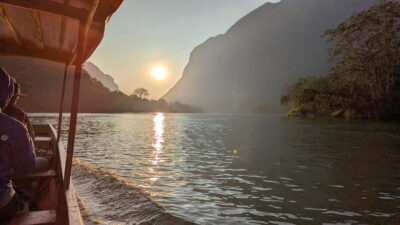
Luang Prabang to Nong Khiaw: River Cruise, Hike & Waterfall
Read our review →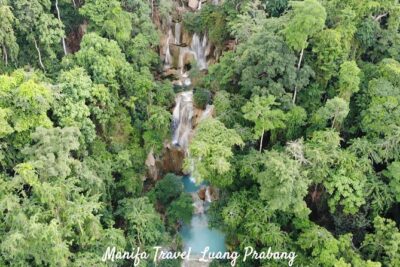
Full Day Trek to Kuang Si Waterfalls, Remote Village
Read our review →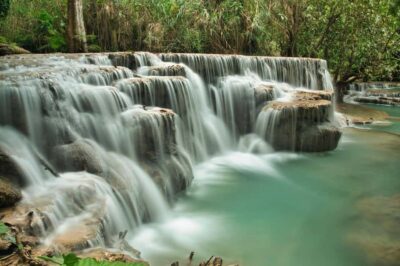
Luang Prabang Thin Pha Trail & Tad Sae Falls Trek
Read our review →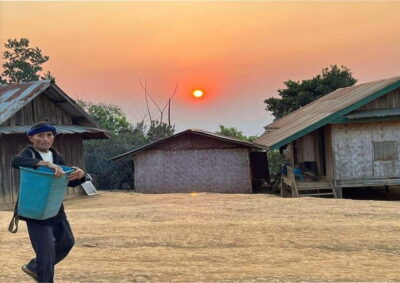
Day Trek to Kuangsi Waterfall and Bear Sanctuary – Luang Prabang full day tour
Read our review →Browse the lists this tour appears in