
Reviewed · LAOS COOKING CLASSES
Luang Prabang: Evening Cooking Class & Local Baci Ceremony
The heart of this four-hour evening is the Baci ceremony, a Lao blessing led by local elders in a family setting. You will also shop for ingredients at a local market, cook five dishes, eat dinner together, and listen to traditional music in a pavilion overlooking rice fields.
I especially like the market visit, where your guide explains herbs, produce, and daily Lao cooking before you buy what goes into the meal. I also like the small group limit of six, which leaves room for questions and hands-on cooking. The main consideration is that this is a cultural evening as much as a cooking lesson, so you may get less choice over the menu than in a formal cooking school.
Key points to know
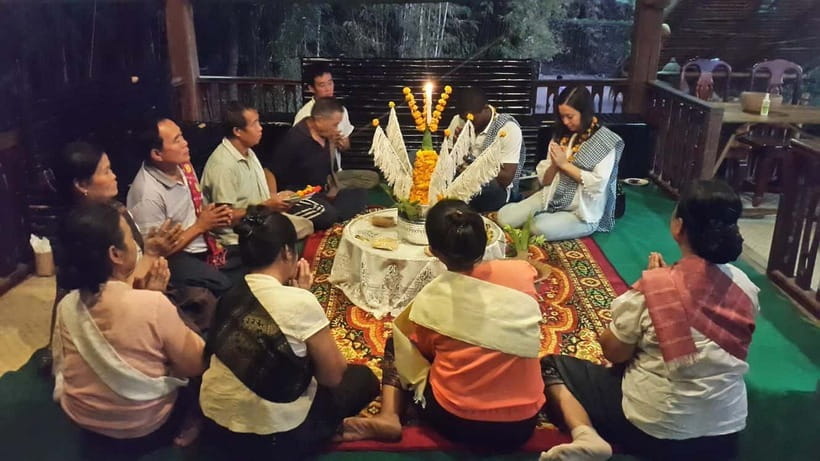
- A real Baci blessing: Local elders lead a personal ceremony with chanting, blessings, string bracelets, and small treats.
- Five Lao dishes: You help prepare a full home-style meal, including dishes such as soup, dips, meat, fish, salad, or sticky rice, depending on the evening.
- Market first, cooking second: The food market gives useful context for the ingredients and the way food fits into everyday life.
- A rural setting: The open-air pavilion looks over rice fields and mountains, with sunset views possible from the cooking area.
- Traditional music: The evening ends with local music, including performances on the khene, a traditional Lao instrument.
- Small and personal: Groups are limited to six, and hotel pickup and drop-off in Luang Prabang are included.
Why this Luang Prabang evening feels different
Many cooking classes teach you how to prepare a meal. This one adds a visit to a local market, a family dinner, a Baci ceremony, and traditional music. That gives the evening a wider purpose: you are not simply following recipes, you are seeing how food, family, belief, and hospitality connect in Laos.
The experience is operated by Wander Laos Tour Co., Ltd., and the family atmosphere is central to its appeal. Guides named Si, Somsay, Sam, and Chian are praised for explaining local customs clearly and keeping the mood easygoing. The exact guide may vary, but the setup is designed around conversation rather than a large tour group moving through stations.
You leave Luang Prabang at about 4 PM and return around four hours later. That timing works well after a day of temples or walking. The ride out also changes the mood of the evening, taking you from the town center toward a quieter village setting.
One practical point matters from the start: dress respectfully. Your knees and shoulders should be covered for the Baci ceremony. Comfortable clothes and shoes are also sensible because you will walk through a market, help with cooking, and sit in a traditional-style pavilion.
More laos cooking classes in Luang Prabang:
- Luang Prabang: Bamboo Weaving Workshop & Cooking Class
★ 5.0 · 96 reviews - Luang Prabang: Cooking Class at the Former Royal Palace
★ 4.9 · 51 reviews - Tribal Cooking Class in Luang Prabang Forest and visit
★ 5.0 · 15 reviews
The local market is the first lesson
Your driver collects you from your hotel lobby in Luang Prabang. The pickup service is useful here because the evening location is outside the center, and you do not need to arrange a separate taxi for either direction.
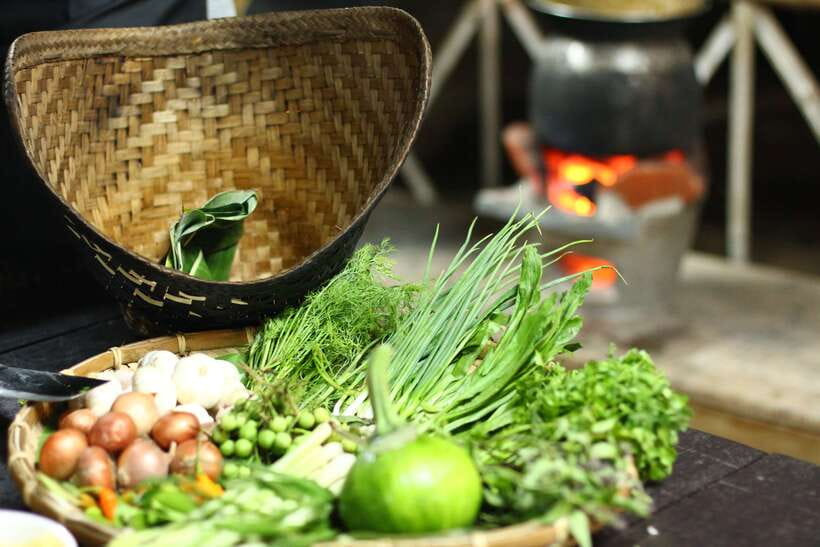
The first stop is a local food market. This is not just a quick shopping errand. Your guide introduces the fresh ingredients and herbs used in ordinary Lao meals, explains what you are seeing, and helps connect the market stalls with the food you will cook later.
That context makes a big difference. In a standard class, ingredients often appear washed, measured, and neatly arranged. Here, you first see them as local shoppers see them. You might encounter unusual produce, herbs, fish, meat, and other items sold for daily meals. One useful improvement would be more time discussing products that are not used in the class, but the market still adds much more than a recipe sheet can.
The market stop is also a good chance to ask questions. If you are curious about how sticky rice is prepared, how herbs are used, or why certain vegetables appear in Lao cooking, ask while you are there. Guides such as Somsay have been praised for explaining not only the ingredients but also the role of the market in local daily life.
Do not expect a polished food hall built for visitors. The appeal is the ordinary setting. You see where the evening meal begins, and you get a clearer sense of Lao food before sitting down to cook.
Cooking five dishes in a traditional home setting
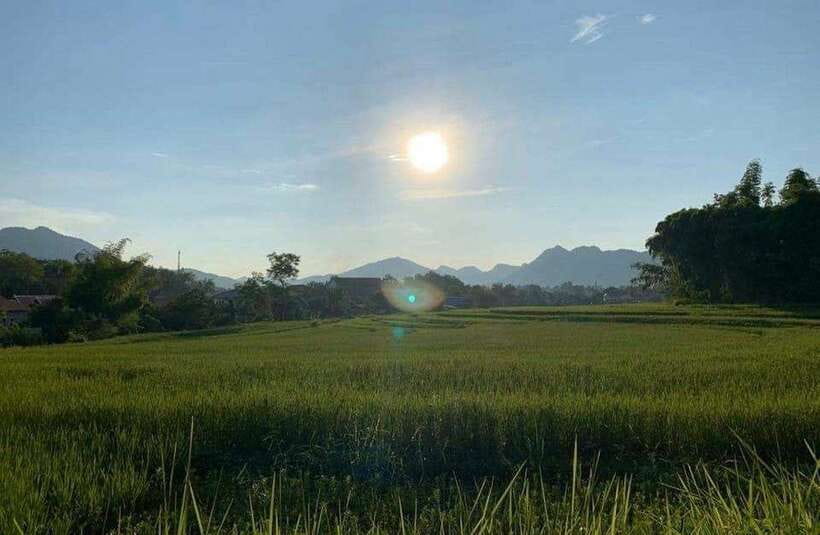
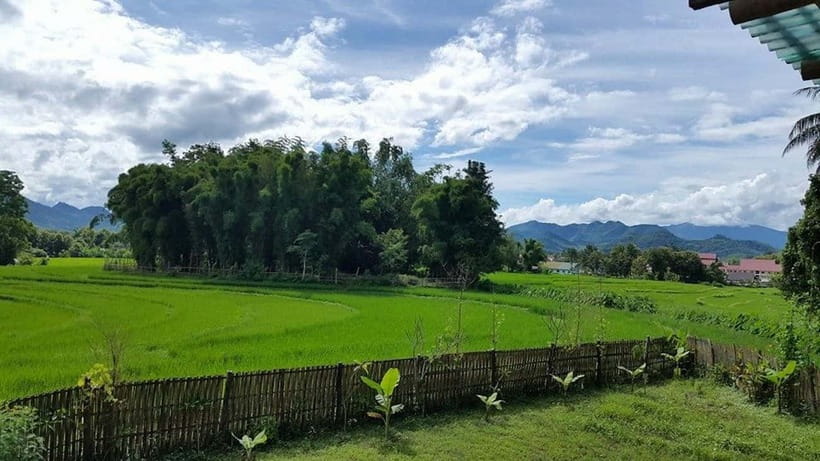
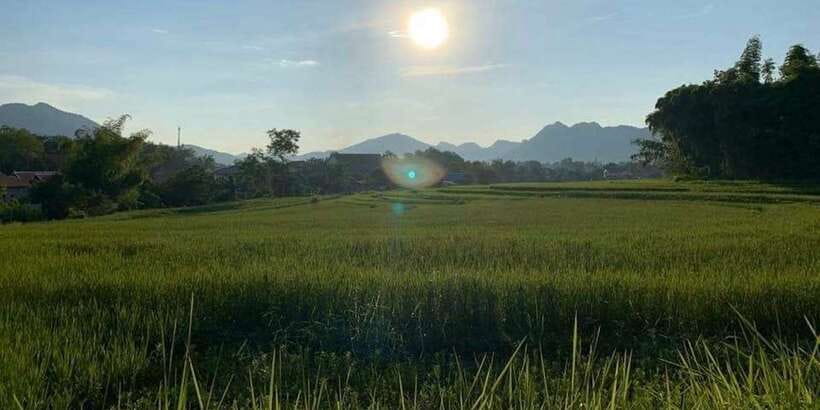
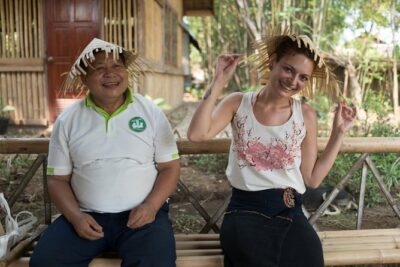
After the market, you continue to the cooking location, a rustic pavilion modelled on a traditional Lao house. It is open to the air and looks across rice fields toward the mountains. If the timing and weather cooperate, the late afternoon light and sunset make this one of the prettiest parts of the experience.
The kitchen uses simple traditional methods. One detailed account describes cooking over charcoal in clay burners, with the work taking place in a basic outdoor kitchen. That is useful to know if you expect stainless-steel counters and individual induction burners. This is home cooking, not a professional culinary studio.
You help prepare five typical Lao dishes. The exact combination can vary, but the meal has included soup, meat, fish, salad, sticky rice, and dips made from tomato or eggplant. Pumpkin soup, pork lard, laap, and fish or pork cooked in banana leaves have also appeared in descriptions of the meal.
The class is hands-on, but the amount of individual work depends partly on group size. With only one or two participants, you may handle nearly every step. With a full group of six, you will still take part, but some chopping, cooking, or mixing may be shared.
This is the one area where expectations need a little adjustment. You may not choose from a long menu, and one person found the class could have offered more cooking choices and more instruction. Still, the small format and family helpers keep it personal, and the focus is on making a good Lao dinner rather than learning restaurant-level technique.
Vegetarians can be accommodated according to the experience information and direct accounts from participants. If you have dietary needs, raise them when booking or with the guide at the start. The provided details do not specify every possible dietary restriction, so clear communication is wise.
The food itself is a major strength. You prepare a full meal and then eat it together in the Lao style. That can include several dishes shared at the table rather than one plated course after another. It is filling, social, and a useful lesson in how Lao meals work.
You may want to ask for written recipes before leaving. A participant specifically wished for copies to recreate the dishes later, and the experience details do not promise printed recipes. Take notes on ingredients and cooking steps if you want to repeat the meal at home.
The Baci ceremony is the emotional center
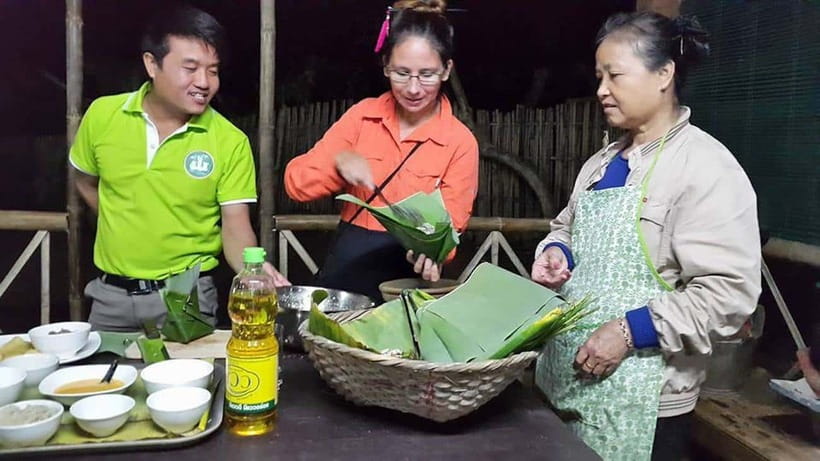
The Baci, also called su khwan, is a Lao ceremony intended to call a person’s protective spirits back to them and offer good wishes. It can mark a marriage, birth, homecoming, recovery from illness, return from childbirth, religious occasion, or annual festival. It can take place at any time of year, though it is traditionally preferred before noon or before sunset.
Here, the ceremony is held with local elders and family members. Your guide explains what is happening before the chanting and blessings begin, which is important because the ritual may otherwise seem mysterious or difficult to follow.
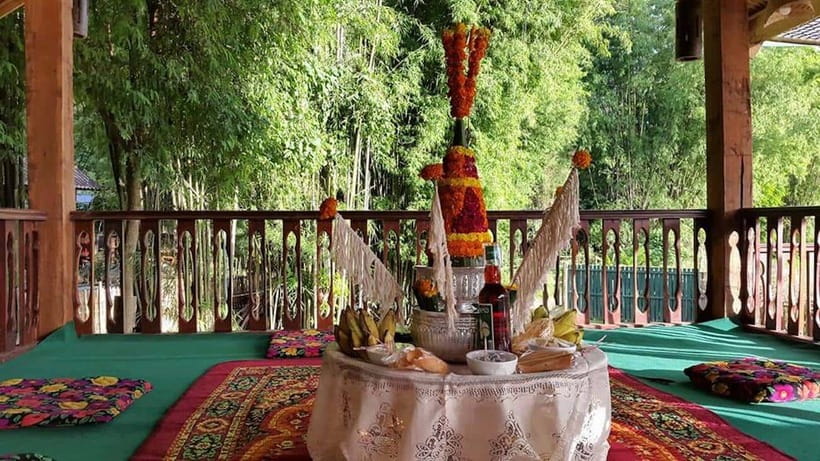
You sit as the ceremony unfolds around a central arrangement. The details can include singing, chanting, food, small treats, and white cotton strings tied around your wrists as blessings for good luck and well-being. Some participants also describe receiving a small taste of local whiskey.
The Baci is not a staged show in the same way as a dance performance. It is a meaningful local custom, and your respectful participation matters. Keep your shoulders and knees covered, listen to the guide, and follow the family’s instructions. You do not need special religious knowledge, but you should approach the ceremony with care rather than treating it as a photo opportunity.
For many people, this becomes the most memorable part of the evening. You are welcomed into a family environment and receive a blessing from local elders. That is a more personal encounter than watching a cultural presentation from a seat in a theater.
The ceremony may also involve a small exchange of goodwill. One account describes participants being invited to sing a song for the family, while another mentions snacks and whiskey. These moments are not guaranteed in precisely the same form each night, but they show the friendly, participatory spirit of the gathering.
If you are uncomfortable with religious or spiritual ceremonies, this may not be the right tour for you. The Baci is not an optional side note. It is one of the central reasons to book the experience.
A few more Luang Prabang trips to weigh up
- Day-time Bamboo weaving & Cooking Classes join-in
★ 5.0 · 38 reviews - Evening Bamboo weaving & Cooking classes join-in
★ 5.0 · 17 reviews - Traditional Market Tour and Private Laotian Cooking Class with a Local
★ 5.0 · 13 reviews - The Namkhan – Cooking Class
★ 5.0 · 8 reviews
Dinner tastes better when you helped make it
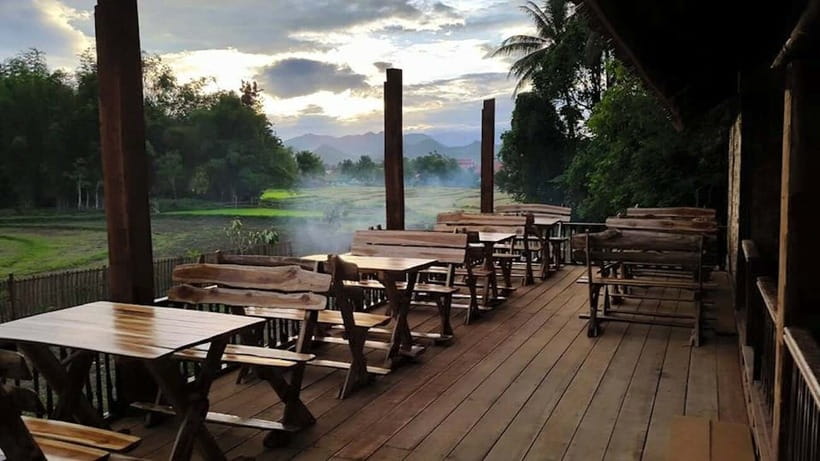
Once the cooking is finished, you sit down with the hosts and share the meal. The setting is relaxed and informal, and the food is served in the same spirit as a home dinner.
Expect bold flavors and a range of textures. Lao food often makes strong use of herbs, dips, sticky rice, vegetables, meat, and fish. The class has included both mild and spicy options, and the food can suit vegetarians as well as meat eaters when arranged in advance.
Sticky rice is especially important to the experience. It is a staple of Lao meals and is commonly eaten by hand, rolled into a small ball, and used to pick up other food. Your guide can help you understand the custom, so ask rather than worrying about using the wrong technique.
This is also a good time to talk with the hosts. Several guides and family members help with the evening, and the setting encourages conversation about food, family life, and different countries. The strongest part of the meal is not fancy presentation. It is the feeling that you have helped make what everyone is eating.
Alcoholic drinks are not included. Some ceremonial whiskey may be offered as part of the Baci, but do not assume a full drinks service. Food and drinks from outside are not allowed, so plan to rely on the included home-cooked dinner.
Traditional music in the rice fields
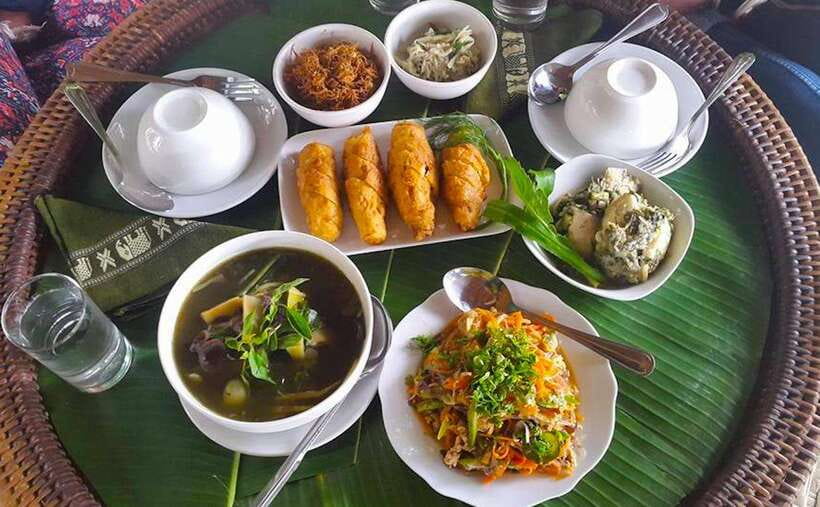
After dinner, local musicians perform traditional music. Performers may wear Hmong traditional clothing, and the program can include the khene, a Lao mouth organ associated with local music. You may also be invited to try the instrument yourself.
The performance is a gentle finish after the activity and ceremony. It gives you time to sit back, look across the rice fields, and listen without needing to chop, stir, or follow instructions. Some evenings include singing and dance as well as instrumental music.
The music is not presented as a large stage production. That is part of its appeal. You are watching local performers in a family setting, often close enough to see the instrument and ask how it works.
Because the activity takes place outdoors or in an open-air structure, views and comfort depend on weather and daylight. The setting is particularly attractive in the late afternoon, but bring practical clothing rather than dressing only for photographs.
What the $51 price really covers
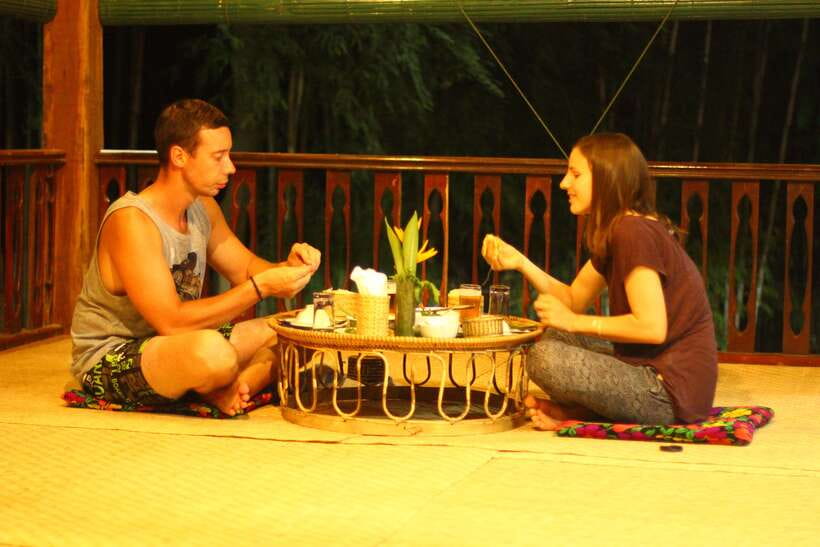
At $51 per person, the price is fair if you value personal contact and several linked activities rather than only the cooking lesson. You receive hotel pickup and return, an English-speaking guide, the market visit, the cooking class, a five-dish dinner, the Baci ceremony, and live music.
A cheaper class in Luang Prabang might focus only on cooking. This experience adds transport and a cultural ceremony with local elders, which explains much of the cost. The group cap of six also matters. You are not paying for a crowd-based demonstration with limited contact.
The value is strongest for people who want an evening with several layers. You get food instruction, local ingredients, a rural setting, a family meal, spiritual tradition, and music in four hours. If your only goal is to learn exact recipes in detail, a dedicated cooking school may suit you better.
The booking terms are flexible. You can cancel up to 24 hours before the activity for a full refund, and you can reserve now and pay later. Check the available start time when booking, since the stated pickup is around 4 PM but availability can vary.
Who should book this evening
I would point food lovers toward this experience, especially if you want to understand Lao cooking beyond a restaurant menu. It also suits people who enjoy small groups, family contact, and cultural traditions explained in a clear, friendly way.
It is family-friendly, but sitting for a Baci ceremony and taking part in cooking may be less comfortable for very young children than a short market visit. The activity is not suitable for pregnant women, people with mobility impairments, or wheelchair users.
You should also book it if you want a break from Luang Prabang’s busy central streets. The move to a village setting and rice-field pavilion gives the evening a different pace.
You may prefer another activity if you want a highly structured chef-led class, a broad menu choice, or a purely food-focused lesson. The cooking is real and hands-on, but it shares the evening with cultural and musical activities.
Practical tips for a respectful, comfortable evening
Wear trousers or a skirt that covers the knees, along with a shirt covering the shoulders. Comfortable shoes help at the market and around the cooking area.
Arrive in your hotel lobby about five minutes before the scheduled pickup. Pickup is available from hotels in Luang Prabang city, and the return transfer is included.
Bring questions. Ask about the market produce, the Baci, the khene, and the dishes as they are prepared. The evening becomes more useful when you treat it as a conversation rather than simply following directions.
Avoid bringing outside food or drinks. Alcoholic beverages are not included, apart from any small ceremonial offering that may form part of the Baci.
The overall rating is 4.9 from 151 ratings, with a 96 percent perfect score for transport. The strongest pattern is clear: the warm family welcome, personal Baci, tasty food, market visit, and music are the parts that give this evening its appeal. The modest concerns are also clear: limited menu choice, variable instruction time, and no promised recipe handout.
Should you book the Baci and cooking evening?
Book it if you want personal Lao culture with dinner attached. The Baci ceremony and family setting make this more than another cooking class, while the market and five-dish meal give the evening enough practical food content to satisfy curious home cooks.
I would skip it only if you need wheelchair access, want a formal culinary lesson with full menu control, or prefer to avoid spiritual ceremonies. For most visitors who have four free hours in Luang Prabang and want a warm, small-scale introduction to Lao life, $51 is a sensible use of an evening.
FAQ
How long does the Luang Prabang cooking and Baci experience last?
The activity lasts four hours, with hotel pickup scheduled at about 4 PM. Check availability for the exact starting time.
Is hotel pickup included?
Yes. Pickup and drop-off are included for hotels in Luang Prabang city. You should wait in the hotel lobby five minutes before pickup.
How large is the group?
The activity is limited to six participants, making it a small-group experience.
What happens during the market visit?
You visit a local food market with an English-speaking guide and learn about the fresh ingredients and herbs used in Lao cooking.
How many dishes will I cook?
You will help prepare five typical Lao dishes using local ingredients. The exact dishes may vary.
Is the cooking class suitable for vegetarians?
Yes. The cooking class can accommodate vegetarians. Tell the provider about your needs when booking or before cooking begins.
What is the Baci ceremony?
The Baci is a Lao blessing ceremony used for occasions such as marriage, birth, homecoming, recovery from illness, and festivals. Local elders lead the ceremony, which can include chanting, blessings, and white strings tied around your wrists.
What should I wear?
Wear comfortable clothing and shoes, with your knees and shoulders covered for the Baci ceremony.
Are drinks included?
The home-cooked dinner is included, but alcoholic drinks are not. Outside food and drinks are not allowed.
Who should not book this activity?
The activity is not suitable for pregnant women, people with mobility impairments, or wheelchair users.
More Evening Experiences in Luang Prabang
- Luang Prabang: Afternoon Kuang Si Waterfalls & Sunset Cruise
★ 4.6 · 158 reviews - Luang Prabang Evening Food Tour by Tuk-Tuk
★ 4.5 · 68 reviews - Luang Prabang: Mekong Sunset Cruise & Lao Tasting Dinner
★ 4.3 · 27 reviews - From Chiang Rai : 2 Day 1 Night Slow Boat to Luang Prabang
★ 4.0 · 26 reviews
More Workshops in Luang Prabang
- Luang Prabang: Hmong Batik Art Workshop
★ 5.0 · 27 reviews - Luang Prabang: Weaving Workshop Half-Day Experience
★ 5.0 · 9 reviews - Laos Cooking Class in Luang Prabang
★ 4.5 · 7 reviews - The Namkhan – Yoga Class (8 am or 4 pm)
★ 4.0 · 5 reviews
Just added around Luang Prabang
- The Namkhan – Yoga Class (8 am or 4 pm)★ 4.0 · 5 reviews
- Sunset Cruise in Luang Prabang with Live Performance★ 4.5 · 3 reviews
- Unwind with a Sunset Cruise on the Mekong River★ 5.0 · 4 reviews
- Private Tour: Half-Day City Tour of Luang Prabang★ 4.5 · 4 reviews
- Luang Prabang Night-time Explorer★ 3.5 · 3 reviews
- Luang Prabang’s Beauty & Heritage in 1 Day – All-Inclusive Tour★ 5.0 · 6 reviews
- Luang Prabang Foodie Walking Tour and Monk Blessing★ 5.0 · 7 reviews
- Laos Buffalo Dairy Tours Interact, Learn and Taste Fresh Flavors★ 5.0 · 6 reviews
Laos Cooking Classes, compared.
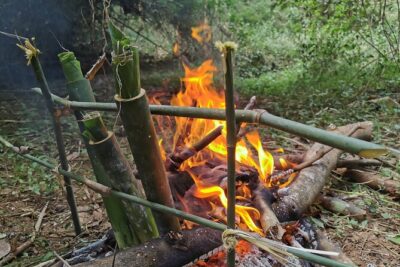
Tribal Cooking Class in Luang Prabang Forest and visit
Read our review →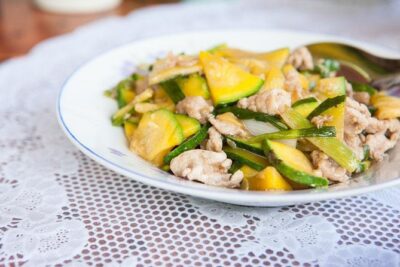
Traditional Market Tour and Private Laotian Cooking Class with a Local
Read our review →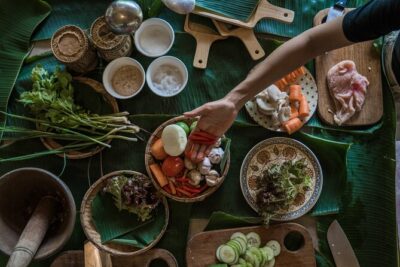
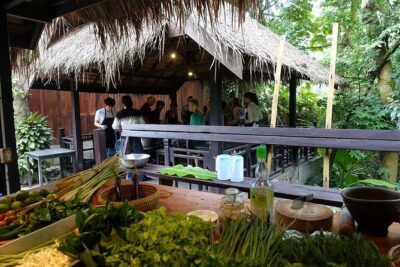
Full Day bamboo experience with cooking class & Kuang si waterfalls
Read our review →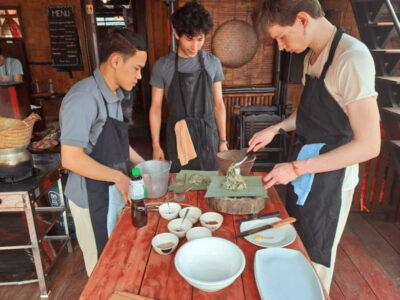
Browse the lists this tour appears in