
Reviewed · FOOD & DRINK
Luang Prabang Local Market and Morning Food Tour with Drinks
Luang Prabang’s best breakfast is not waiting at your hotel. It is being prepared at Phosi Market, where cooked food, herbs, sweets, and daily supplies fill an indoor and outdoor market used by local families. This two-hour morning outing takes you there by tuk tuk and turns breakfast into a lesson about Lao food and daily life.
I like the small maximum group of 10, which makes it easier to hear your guide and stop at food stalls without forming a human traffic jam. I also like the focus on dish histories. Guides such as Anou and Khamla explain not only what you are eating, but how the dishes connect with Lao culture and Southeast Asian cooking.
The main drawback is timing. The tour starts at 7:00 am, and the meal centers on local dishes rather than familiar hotel breakfast food. Some flavors can be spicy, and the two-hour schedule leaves little room for a slow market wander after the tasting.
Key points at a glance
- Breakfast begins at 7:00 am: You trade a standard hotel meal for several traditional Lao morning dishes.
- Phosi Market is the main stop: Luang Prabang’s largest market sells cooked food, fresh produce, clothing, cookware, bedding, and other daily goods.
- Four featured tastes: Expect Naem Khao, Khao Poun, Pun Mang, and Kao Sung Ka Ya, with ingredients ranging from pork and herbs to coconut and sticky rice.
- Local transport is part of the experience: A tuk tuk provides pickup before the walking portion through the market.
- Guides add cultural context: Anou and Khamla are among the guides associated with this experience, explaining food, history, and local customs.
- A compact small-group outing: The tour lasts about two hours and is limited to 10 people.
Why this breakfast belongs in your Luang Prabang plans
Luang Prabang is known for its temples, old royal setting, and position where the Nam Khan and Mekong rivers meet. Those sights matter, but food gives you a more ordinary and personal way to understand the town.
This experience takes you into the morning routine of Luang Prabang. Instead of simply photographing a market, you are shown what people eat early in the day, how dishes are put together, and which ingredients appear again and again in Lao cooking.
That distinction matters. A market can be hard to read on your own. You may see a tray of noodles or a bowl of sauce without knowing its name, purpose, or usual accompaniments. A guide can connect those details to the wider food culture, which is the main reason to pay for this outing rather than simply walking through Phosi Market alone.
The tour also offers a gentle introduction to Lao flavors. You will encounter pork, rice noodles, sticky rice, fresh herbs, peanuts, eggplant, coconut, egg, sour sauce, and sweetness in different combinations. If you enjoy food with heat, you may find the cooking especially satisfying. If you prefer mild food, ask your guide about spice levels before tasting.
A few more Luang Prabang trips to weigh up
- Luang Prabang Evening Food Tour by Tuk-Tuk
★ 4.5 · 68 reviews - Luang Prabang: Mekong Meals Food Tour with 15+ Tastings
★ 4.9 · 58 reviews - Mekong Meals Food Tour with 15+ Tastings
★ 5.0 · 37 reviews
A 7:00 am tuk tuk start
The early start is practical, not just atmospheric. Breakfast foods are already being prepared, cooked meals are ready to serve, and the market is functioning as a place of daily trade rather than a display built for sightseeing.
Pickup is offered, and local tuk tuk transport gets you moving before the walking section. The ride is a useful part of the experience because it keeps the morning simple. You do not need to work out how to reach the market before sunrise, and you get a short taste of a common form of local transport.
The meeting time also shapes the day. By finishing after roughly two hours, you still have most of the morning for Luang Prabang’s temples, riverside streets, museums, or further food stops.
This is not a late breakfast tour that you can fit in after a slow start. Set an alarm, leave room for a proper meal, and arrive ready to eat several small portions. You will get more from it if you treat the first meal of the day as the main event.
Four dishes that explain Lao breakfast
The food is the heart of the outing. The experience highlights four dishes and sweets, each offering a different texture and set of flavors.
Naem Khao
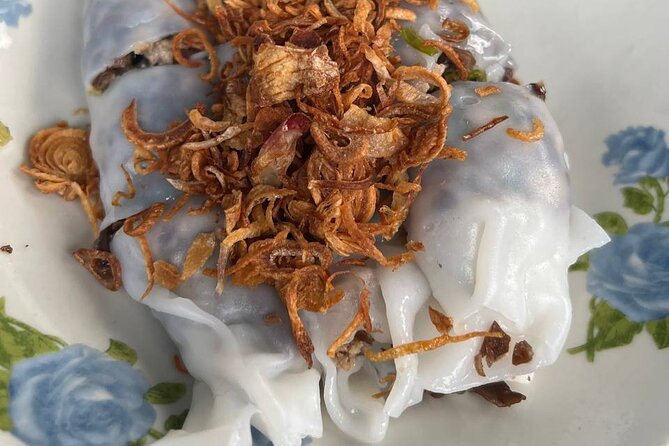
Naem Khao is described here as a steamed rice cake with egg, served with sour sauce and something sweet. That combination gives you several contrasts in one bite: soft rice, egg, sourness, and sugar.
It is a good example of why an explanation helps. Without a guide, you might focus only on the taste. With context, you can pay attention to how the dish balances flavors rather than expecting a single dominant note.
Same river towns, a completely different day out:
- Luang Prabang: Cruise to Pak Ou Caves & Kuang Si Waterfalls
★ 5.0 · 1,769 reviews - Luang Prabang: Cruise to Pak Ou Caves & Kuang Si Waterfalls
★ 4.8 · 1,360 reviews - Half Day Mekong Cruise to Pak Ou Caves (Morning / Afternoon)
★ 4.6 · 290 reviews - Luang Prabang: UNESCO World Heritage City Highlights Tour
★ 4.6 · 201 reviews
Khao Poun
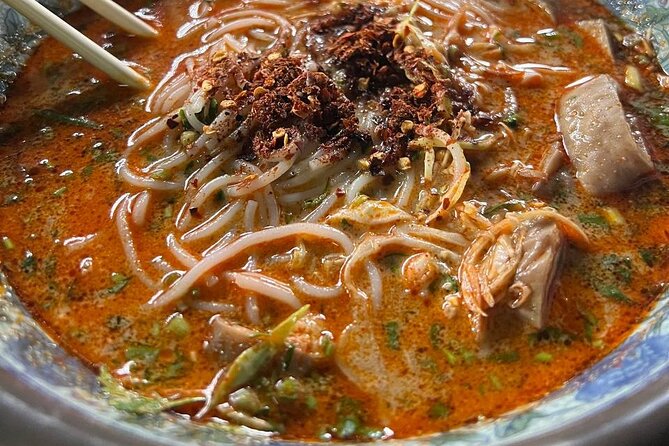
Khao Poun is an authentic rice noodle dish with pork and fresh herbs. The noodles provide the base, while pork adds weight and the herbs bring a fresher note.
This is the sort of breakfast that feels more like a complete meal than a pastry and coffee. If you normally eat lightly in the morning, pace yourself. The tour is designed around sampling local food, but the portions and order of tasting may still leave you quite full.
Pun Mang
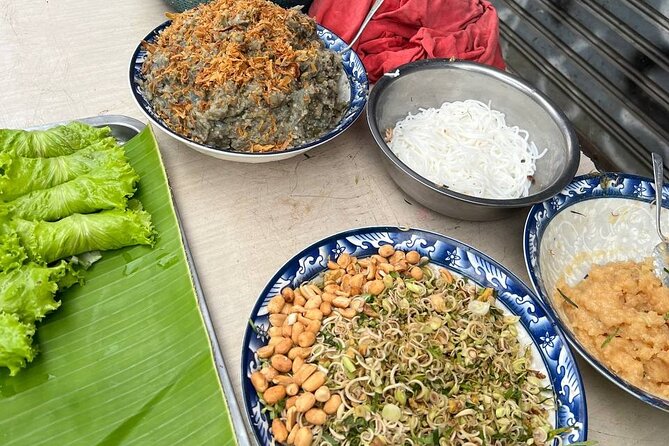
Pun Mang combines pork, lemongrass, peanuts, and eggplant, rolled in fresh lettuce. The lettuce gives the dish a crisp wrapper, while lemongrass and peanuts add fragrance and texture.
This is also a useful introduction to the way herbs and vegetables shape Lao food. The dish is not just meat served on its own. It brings together savory pork, aromatic lemongrass, nutty peanuts, soft eggplant, and fresh lettuce.
Kao Sung Ka Ya
Kao Sung Ka Ya is a steamed sticky rice dessert with shaved coconut. It gives the meal a sweet finish and shows another side of sticky rice, which appears here in dessert form rather than as a savory staple.
The coconut adds a familiar tropical note, but the sticky rice makes the texture more substantial than a light pudding. If you enjoy ending breakfast with something sweet, this may be your favorite stop.
Walking through Phosi Market
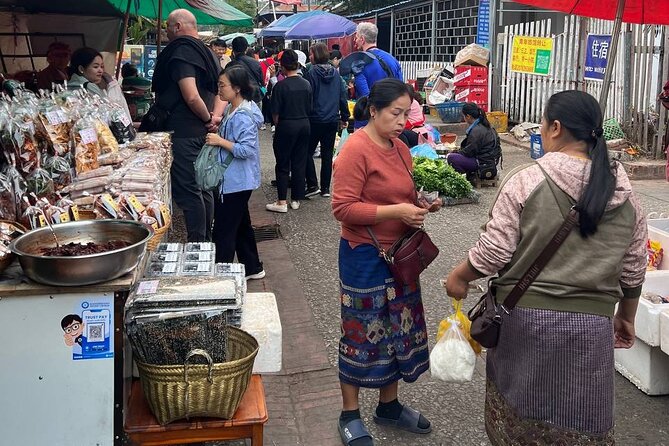
Phosi Market is Luang Prabang’s biggest market and supplies much of the town. It includes indoor and outdoor areas, so the walk is not limited to one neat row of prepared dishes.
You can expect to see cooked meals alongside fresh vegetables and other goods used in daily life. The market also sells clothing, furniture, cookware, bedding, and live animals. That range makes the visit more useful than a food-only stop, since you see the market as a working source of household supplies.
Your guide introduces you to market traders and points out colorful food displays. Photography is welcome, but the guide’s presence helps you approach the scene with more care. You can ask what an ingredient is, how it is used, or which foods are common in the morning.
The market may feel busy and visually intense, especially if you are used to polished food halls. That is part of its appeal, but it can also be a lot to take in during one hour. Keep your attention on the guide, watch your footing, and avoid expecting every stall to be arranged for easy viewing.
The market walk is listed as about one hour, with another hour devoted to Luang Prabang itself and the food experience. In practice, the market is the clear center of the outing, while the wider town provides the setting and historical frame.
The history behind the food
Luang Prabang was Laos’s royal capital until 1975 and remains known for its Buddhist temples, including Wat Xieng Thong and Wat Mai. The town’s past is not separate from the food experience. It helps explain why a morning market can offer more than a quick meal.
A guide such as Anou or Khamla can connect local dishes with the country’s history, culture, and place within Southeast Asia. That is the feature I would value most if you are new to Laos. Food vocabulary can be confusing at first, and cultural context makes the meal easier to remember.
The tour is not a temple visit, so do not book it expecting entry to Wat Xieng Thong or Wat Mai. Instead, think of Luang Prabang’s historical identity as the background to the market visit. You are learning about the town through what people cook and buy, not through a formal monument tour.
Several people who took the experience specifically praised the guides’ explanations of national history and cuisine. The names Anou and Khamla are associated with especially well-regarded outings, but your assigned guide may vary.
How much value do you get for $39?
At $39 per person, this is not the cheapest way to eat breakfast in Luang Prabang. You could spend much less by ordering one dish at a local stall and walking through the market independently.
The price makes more sense if you want several tastings, local transport, introductions to traders, and explanations of the dishes. You are paying for interpretation and structure, not just food. For a first morning in Laos, that can save you from guessing what to order or missing dishes that are hard to identify.
The small group limit also helps justify the cost. With no more than 10 people, the guide can explain ingredients and answer questions without shouting across a large crowd. You still should not expect a private tour, but the group is compact enough for conversation.
The value is strongest for food-focused visitors, first-time visitors to Laos, and people who want cultural background with their meal. It is weaker for anyone who already knows Lao cuisine and simply wants the lowest possible breakfast price.
What the timing and group size mean
Two hours is enough for a focused introduction, but not enough for an unhurried market study. You will sample several foods, hear explanations, take photographs, and walk through the market. You will not have unlimited time at every stall.
The 10-person maximum is a useful middle ground. A solo visitor or couple can meet other people without joining a large coach group. Families and small groups should find the format manageable, although the early hour may be tiring for young children.
Most people can participate, according to the activity information. Pickup is offered, and a mobile ticket is provided. The exact pickup arrangement should be checked when booking, since the supplied details do not specify a single hotel or meeting address.
The booking pattern also suggests planning ahead. This experience is booked an average of 121 days in advance, so it is sensible to reserve early if your dates are fixed. That is especially important for a small tour with a limited number of places.
What to know before you book
Come hungry, but not starved. You will be tasting a range of dishes, and the combination of noodles, pork, sticky rice, dessert, peanuts, herbs, and sauces can add up quickly.
Spice is worth considering. One food-focused description notes that Lao cuisine can be spicy, while also finding it manageable for people who enjoy heat. If you are sensitive to chili, tell the guide early and ask before sampling sauces.
Bring a phone or camera if you want to photograph the market displays. The guide will introduce you to traders, but normal market courtesy still matters. Ask before photographing people closely, and follow any direction from your guide.
Wear something suitable for a morning walk and market visit. The supplied information does not give a dress code or special equipment list, so you do not need to pack for a technical excursion. The key preparation is arriving on time and ready for local breakfast.
Cancellation is free up to 24 hours before the 7:00 am start for a full refund. Inside that 24-hour window, the payment is not refunded and changes are not accepted. Cutoff times follow Luang Prabang local time.
Who should book this Luang Prabang food tour?
I would choose this experience if you want food to be your introduction to Laos. It gives you a quick orientation to ingredients, meal habits, market life, and local history without taking an entire day.
It also suits anyone who feels uncertain ordering food independently. The guide can name the dishes, explain the sauces, and show you how several ingredients fit into Lao cooking.
The tour is a good match for photographers, provided you enjoy photographing real market life rather than staged scenes. The colorful displays, indoor and outdoor stalls, and variety of goods give you plenty to notice in a short time.
I would hesitate if you need a late start, dislike unfamiliar foods, or want a long and leisurely market visit. The schedule is fixed, the food is local, and the experience moves at a useful but brisk pace.
Should you book it?
Book this tour if you want more than a cheap meal. For $39, you get a tuk tuk pickup, a guided visit to Phosi Market, several Lao dishes and desserts, and background on the history and culture behind the food.
The strongest reasons to go are the small group, the early access to the market’s food routine, and the guides’ focus on explanation. Anou and Khamla are names associated with particularly strong guiding, though the assigned guide can differ.
Skip it if your priority is spending as little as possible or choosing every dish on your own. For everyone else, this is a compact, useful first taste of Luang Prabang, especially when you want your breakfast to teach you something.
FAQ
Where does the tour take place?
The experience takes place in Luang Prabang, with the main market visit at Phosi Market. The market has both indoor and outdoor areas and sells food, fresh goods, clothing, furniture, cookware, bedding, and other daily supplies.
What time does the tour start?
The tour starts at 7:00 am.
How long does the experience last?
The tour lasts approximately two hours.
Is pickup available?
Yes. Pickup is offered, and local tuk tuk transport is provided.
Which foods are included?
The featured foods are Naem Khao, Khao Poun, Pun Mang, and Kao Sung Ka Ya. These include rice cake, rice noodles with pork and herbs, pork with lemongrass, peanuts and eggplant in lettuce, and a sticky rice dessert with shaved coconut.
How many people can join?
The activity has a maximum of 10 people.
Can I cancel for a full refund?
Yes. You can cancel at least 24 hours before the experience starts for a full refund. Cancellations or changes made less than 24 hours before the start time are not refunded or accepted.
More Morning in Luang Prabang
- Transfer : wonder full Sunrise and landscape at Phu Chifa
★ 4.5 · 6 reviews - Vientiane: Half-Day City Tour – Morning or Afternoon
★ 4.0 · 3 reviews
More Markets in Luang Prabang
- Private Tour Full-day Morning Market, Villages and Scenic Kuang Si Waterfall
★ 4.5 · 22 reviews - Traditional Market Tour and Private Laotian Cooking Class with a Local
★ 5.0 · 13 reviews - Luang Prabang Early Morning Alms Giving and Wet Market
★ 4.5 · 5 reviews - Vientiane Private Lao Cooking Class with Market Tour
★ 4.0 · 3 reviews
Just added around Luang Prabang
- The Namkhan – Yoga Class (8 am or 4 pm)★ 4.0 · 5 reviews
- Sunset Cruise in Luang Prabang with Live Performance★ 4.5 · 3 reviews
- Unwind with a Sunset Cruise on the Mekong River★ 5.0 · 4 reviews
- Private Tour: Half-Day City Tour of Luang Prabang★ 4.5 · 4 reviews
- Luang Prabang Night-time Explorer★ 3.5 · 3 reviews
- Luang Prabang’s Beauty & Heritage in 1 Day – All-Inclusive Tour★ 5.0 · 6 reviews
- Luang Prabang Foodie Walking Tour and Monk Blessing★ 5.0 · 7 reviews
- Laos Buffalo Dairy Tours Interact, Learn and Taste Fresh Flavors★ 5.0 · 6 reviews
Food & Drink, compared.
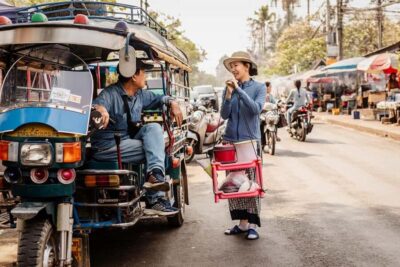
Luang Prabang Plates Food Tour with 15+ Tastings
Read our review →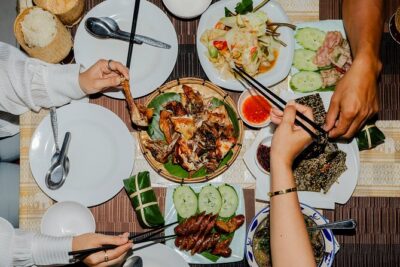
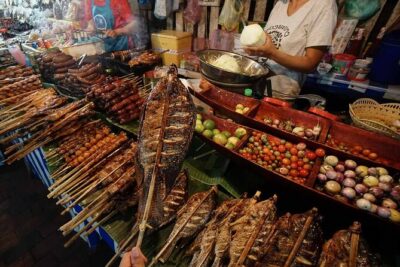
Luang Prabang Street Food Culture, Paper Handicraft Village Tour
Read our review →Browse the lists this tour appears in