
Reviewed · NORTHERN LAOS TOURS
Plain of jars tour with local guide
The most striking part of this Phonsavan day trip is the range of places packed into one route. You move from ancient stone jars scattered across open fields to Ban Naphia, where villagers turn aluminum bomb casings into spoons, then on to the war-damaged remains of Muang Khoun. It is archaeology, village life, and recent history in one long day.
I like that you visit all three jar sites rather than stopping at the best-known one. I also like the private transport and local guide, since the sites are spread out and the route is easier when someone else handles the driving. The main drawback is the pace: eight hours with five stops leaves limited time at each place, and the tour is non-refundable after booking.
Key points at a glance
- All three Plain of Jars sites: See sites 3, 2, and 1, including the major field with 334 jars.
- Ban Naphia spoon village: Learn how aluminum from wartime bomb casings becomes household spoons for local and tourist markets.
- Muang Khoun history: Visit Wat Phiawat and That Foun in the former capital of Xieng Khouang.
- Private vehicle and guide: Your group has its own transport, with hotel pickup and drop-off included.
- Lunch included: The midday meal is scheduled around Lak Kha, while soft drinks cost extra.
- Good use of a full day: The route covers archaeology, village work, food, and war history without requiring you to plan several separate trips.
Why this Plain of Jars day is more than a photo stop
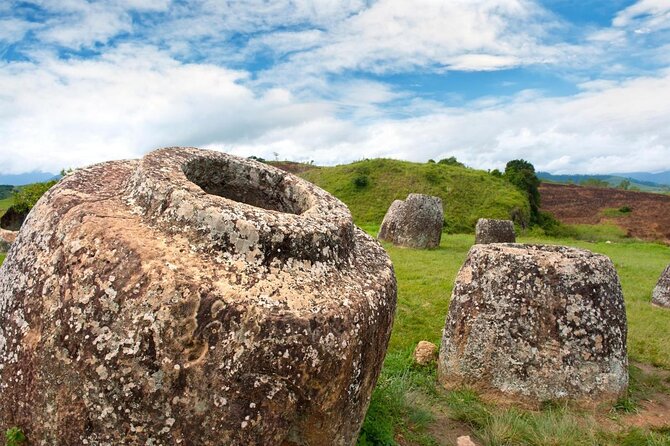
The Plain of Jars is easy to treat as a quick collection of odd stone containers. This tour gives you a fuller picture. You see three separate sites, each with a different setting, then connect the archaeological remains with the lives of people living in the surrounding villages.
The jars are the headline, but the day works because of its contrasts. At Ban Naphia, the focus is practical and present-day. In Muang Khoun, the focus shifts to a former royal center damaged during the Vietnam War. The result is a more grounded visit than a simple drive to one field, a few photographs, and a ride back to town.
Your guide is expected to explain the possible stories behind the jars and the local setting. Guides named Mr Lar and Su have been praised for explaining the cultural meaning of what you see, answering questions, and leaving enough free time for independent wandering at the jar sites. That balance matters. You want context, but you also need a few quiet minutes to look across the fields on your own.
More plain of jars tours in Laos:
- Plain of jars share group tour
★ 5.0 · 4 reviews - Plain of jars private tour
★ 5.0 · 3 reviews - 3 Days The Plain of Jars and Xieng Khouan (Depart from Luang Prabang)
★ 5.0 · 3 reviews
Ban Naphia and the useful art of bomb-casing spoons
The first stop is Ban Naphia, reached after pickup at about 8:30 in the morning and a roughly 30-minute drive toward Phaxay district. More than thirty families live in the village, and many earn money by making and selling aluminum spoons.
The material gives this stop its emotional weight. The spoons are made from aluminum bomb casings left from the Vietnam War. You are not simply watching a craft demonstration. You are seeing a community turn a dangerous legacy into useful objects and a source of income.
The visit is scheduled for about 30 minutes, so expect an introduction rather than a long workshop. You may see the production process and the finished spoons sold for local use and to people passing through. If you want a small, practical souvenir with a direct connection to the area, this is the place to look.
The short timing is also the limitation. You will not have hours to study every stage of production or browse at leisure. Still, as an opening stop, Ban Naphia gives the day a human scale before you reach the ancient sites.
Site 3: a short walk through the rice fields
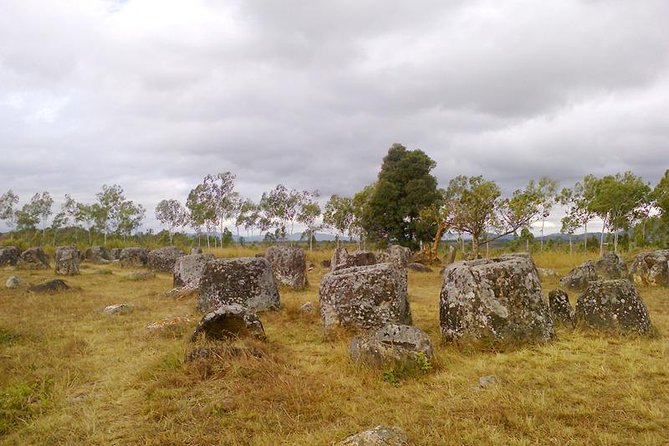
Around 10:00 a.m., the route reaches Plain of Jars Site 3 near Ban Xieng Di. From the vehicle, you walk about ten minutes across a rice field to reach the jars. That walk is part of the experience, not just a transfer between parking areas.
Your guide can point out details connected with the rice season and explain how the field changes through the year. The setting helps you understand that the jars are not displayed in a museum. They sit in working countryside, surrounded by the rhythms of farming.
The visit lasts about 45 minutes. This should give you time to cross the field, hear an explanation, and look around without being hurried from one photograph to the next. Wear shoes suited to a field walk, since the route is not described as a paved path.
Site 3 is a good early introduction because it lets you see the jars in a relatively open rural setting. Do not expect a large visitor center or a reconstructed ancient town. The appeal is the quiet placement of the stones and the unanswered questions around their original purpose.
Site 2 and lunch near Lak Kha
After lunch near Lak Kha at around noon, you continue to Site 2 in the Ban Nakho area. The stop is planned for about 35 minutes, making it shorter than Site 3.
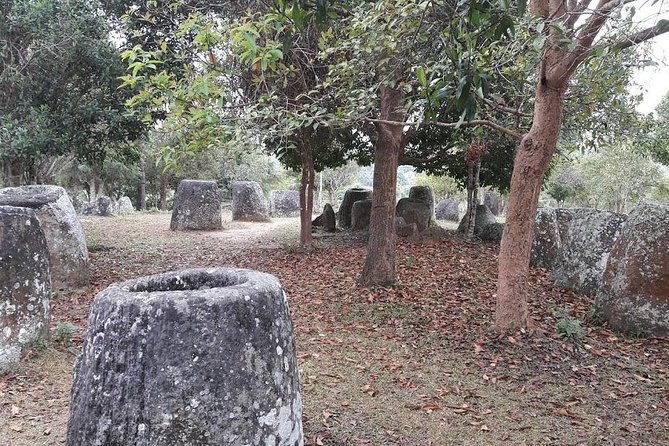
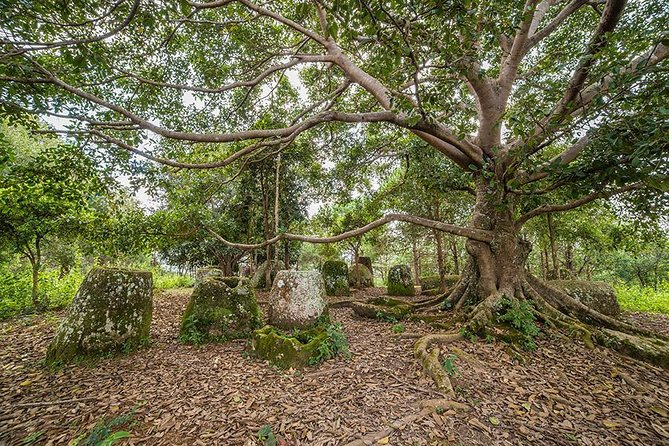
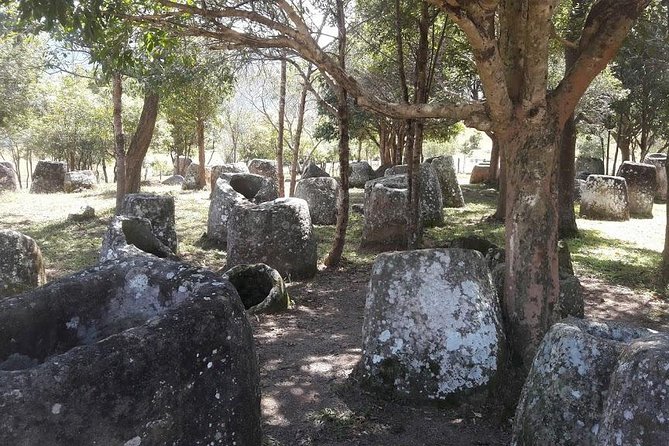
Site 2 is known for its scenery, large trees, and tall jars. Some trees grow inside the stone containers, creating an unusual meeting of living growth and ancient stone. The jars here are described as taller and longer than those at Site 3, so the visit gives you a useful comparison rather than repeating the same view.
This is where a guide adds real value. Without context, the three sites can blur together. With help, you can pay attention to the differences in size, setting, and arrangement. Ask your guide to point out which features make Site 2 distinct from Sites 1 and 3.
Lunch is included, which keeps the day moving and removes one planning chore. Soft drinks are not included, so carry some money if you want one. The schedule places lunch before the afternoon history stop, a sensible break after the morning field visits.
A few more Laos trips to weigh up
- Vientiane Cultural Tour with Private Guide
★ 5.0 · 80 reviews - From Luang Prabang: Guided Mountain Bike Tour with Lunch
★ 4.7 · 72 reviews - 1-Day Tour to Vang Vieng with Private Guide
★ 5.0 · 16 reviews - One Day Guided Tour: Kayaking, Zipline & Tubing In The Cave from Vang Vieng
★ 4.0 · 15 reviews
Muang Khoun, Wat Phiawat, and That Foun
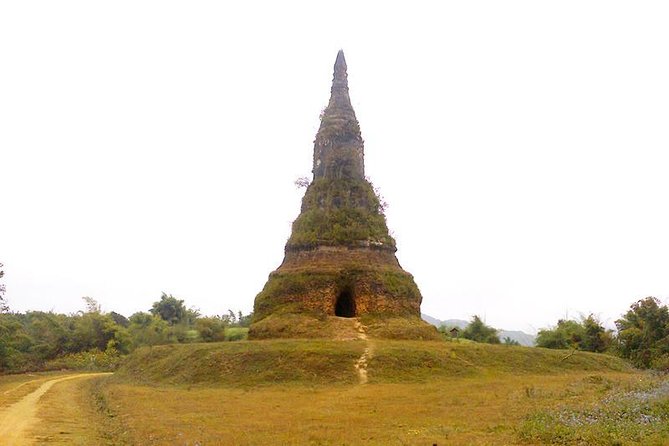
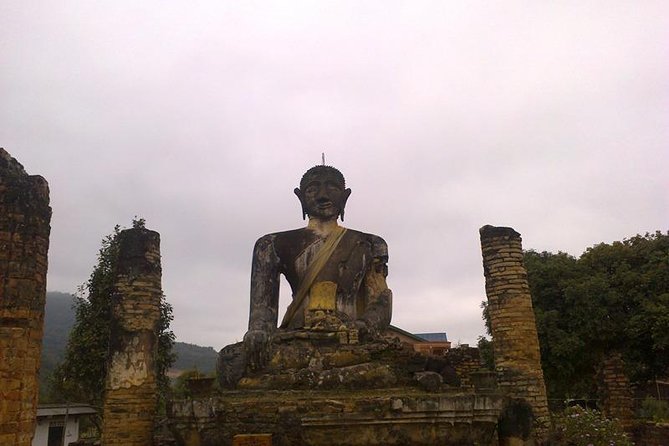
At about 2:00 p.m., the tour turns from prehistoric archaeology to Muang Khoun, the former capital of Xieng Khouang. The town was heavily bombed during the Vietnam War from 1964 to 1973, and the visit includes Wat Phiawat and That Foun.
This stop gives the day its strongest historical contrast. The jar sites raise questions about a distant past. Muang Khoun shows the damage of a much more recent conflict, with religious and civic remains tied to the former capital.
Plan for about an hour here. That is enough time to walk around the named sites and listen to your guide explain what happened, though it may feel brief if you want a long, quiet examination of every ruin. The value comes from seeing these places in the same day as the jar fields. Laos’s past is not one neat story. It includes ancient monuments, royal-era centers, village survival, and the physical scars of war.
This is also the stop most likely to reward a good explanation. Wat Phiawat and That Foun are not just boxes to tick on a route. Ask about their place in Muang Khoun and how the war affected the former capital. The available information does not promise a museum visit or a formal memorial program, so expect an outdoor historical stop rather than a fully developed attraction.
Site 1 and the biggest group of jars

The final major stop comes at about 3:30 p.m. at Plain of Jars Site 1. This site contains 334 jars, with an estimated weight above six tons for the largest examples described on the tour.
Site 1 is the grand finale because of its size and the number of jars gathered there. After seeing the smaller or more secluded settings at Sites 3 and 2, you can better appreciate how unusual this concentration is. The order also works well: the first two sites teach you what to look for, while Site 1 provides the largest visual payoff.
You have about 40 minutes at the site before transport back to your accommodation. Use the time to walk among the jars, compare their shapes and scale, and take photographs. The schedule says transport to the final location and hotel drop-off are included, so you do not need to arrange a separate ride from the last stop.
The drawback is simple: forty minutes is not a full afternoon. If Site 1 is the reason you came to Phonsavan, you may wish the schedule allowed more time there. On the other hand, this tour is built for coverage. It lets you see all three sites plus two other important stops in one day.
How the private format affects the experience
This is a private tour, so only your group participates. That gives you more control than a large shared coach outing. You can ask questions throughout the day, request a little extra time where practical, and avoid waiting for a busload of strangers at every stop.
The tour includes private transportation and an English-speaking driver-guide. That arrangement is especially useful in Phonsavan, where the sites are separated from one another and from town. Pickup and drop-off at your accommodation also reduce the risk of getting lost or spending the evening arranging transport.
The published schedule is quite specific: 8:30 a.m. pickup, Site 3 at about 10:00, lunch around noon, Site 2 at 12:00, Muang Khoun at 2:00, and Site 1 at 3:30. Actual timing can shift, but the outline shows a full day with little wasted space.
Group discounts are available, though the supplied information does not state the discount amount or how many people qualify. If you are traveling with family or friends, check the final group price before booking. Since the tour is private, the $146 cost may offer better value when shared among several people, but the exact per-person price depends on the booking arrangement.
Is the $146 price fair?
The price includes private transport, an English-speaking driver-guide, lunch, entrance fees, and taxes. It also covers hotel pickup and drop-off, which saves you from arranging separate rides to three jar sites, Ban Naphia, and Muang Khoun.
For one person, $146 is a serious day-trip cost. For a small group splitting the vehicle and guide, the value is easier to see. You are not paying only for entry to an archaeological site. You are paying for a full route, local interpretation, meals, and the convenience of returning to your accommodation without further planning.
The strongest value comes from the range of stops. A cheaper option might focus on one or two jar fields, but this outing includes all three. It also adds Ban Naphia and Muang Khoun, giving you a better understanding of local work and wartime history.
The price does not include soft drinks. All fees and taxes are included, but it is still sensible to carry money for drinks or personal purchases at Ban Naphia. Confirmation is provided when you book, and the booking cannot be refunded or changed, so confirm your date and group details carefully before paying.
Who will get the most from this tour?
I would choose this tour if you have one free day in Phonsavan and want the main archaeological sites handled in one organized trip. It suits people who prefer a private vehicle, an English-speaking guide, and a schedule that covers more than the headline attraction.
It is also a good fit if you care about present-day village life. Ban Naphia is not an add-on with no connection to the region. The spoon-making work shows how families make a living from materials tied to the war, and it gives you a direct encounter with local trade.
History-minded visitors should appreciate Muang Khoun. The former capital and its damaged religious sites add necessary context to the wider region. The tour does not treat the Plain of Jars as an isolated mystery. It places the jars within a province shaped by farming, royal history, and conflict.
You may want another option if you dislike fixed schedules or prefer spending several hours at one archaeological site. The itinerary is efficient, but it is not slow. You should also think twice if your plans may change, since cancellation and amendments are not allowed for a refund.
Practical advice before you go
Wear footwear suitable for walking across a rice field at Site 3. The walk is about ten minutes, and the route may feel more comfortable in sturdy shoes than in loose sandals.
Keep your morning flexible. The tour lasts about eight hours, but the listed times are estimates and the road journey between stops shapes the day. Pickup is offered from your accommodation, which makes the start easy, but confirm the pickup details when booking.
Carry money for soft drinks and any spoon purchase in Ban Naphia. Lunch is included, but drinks are not. If you are interested in the craft, ask your guide about where the money from sales goes and how the village trade works.
At each jar site, listen first, then walk independently. The strongest part of the experience is the mix of explanation and quiet observation. Guides such as Mr Lar and Su have been praised for providing useful background while allowing time to explore on your own.
Should you book this Plain of Jars tour?
Book it if you want the broadest one-day introduction to the Phonsavan area. The private format, local guide, included lunch, and visits to Sites 1, 2, and 3 make the $146 price reasonable for a group sharing the cost. Ban Naphia and Muang Khoun also give the day more substance than a jar-only outing.
Skip it if you need a flexible booking or want to linger at Site 1. The non-refundable policy demands firm plans, and the five-stop schedule is full. For most people with one day available, though, this is a practical way to see the jars, meet a village economy shaped by war, and understand why Phonsavan deserves more than a quick stop.
FAQ
Where does the tour take place?
The tour begins in Phonsavan, Laos, and visits Ban Naphia, Plain of Jars Sites 3, 2, and 1, and Muang Khoun.
How long does the tour last?
The experience lasts approximately eight hours.
Does the tour include hotel pickup and drop-off?
Yes. Pickup and drop-off at your accommodation are included.
Is this a private tour?
Yes. Only your group participates, and private transportation is provided.
Is lunch included?
Yes. Lunch is included in the tour price. Soft drinks are not included.
Which Plain of Jars sites are visited?
The itinerary includes Site 3 near Ban Xieng Di, Site 2 near Ban Nakho, and Site 1, which contains 334 jars.
Can I cancel or change the booking for a refund?
No. The experience is non-refundable and cannot be changed after booking.
Just added around Laos
- Vientiane: Lao Cultural Attire Rental Experience★ 5.0 · 3 reviews
- Vientiane Private Lao Cooking Class with Market Tour★ 4.0 · 3 reviews
- Vientiane IG tour & Patuxay monument★ 5.0 · 5 reviews
- Vientiane : Private Custom Tour with a Local Guide★ 5.0 · 6 reviews
- Vientiane classic Food tour ( Included Food )★ 4.2 · 6 reviews
- Vientiane: Half-Day City Tour – Morning or Afternoon★ 4.0 · 3 reviews
- Vang Vieng: Zipline&Kayaking&BlueLagoon 1★ 3.7 · 3 reviews
- Vang Vieng: Zipline&Water Cave&Tham Chang&Blue Lagoon 1★ 5.0 · 3 reviews
Northern Laos Tours, compared.
Nong Khiaw to Luang Prabang, Mekong & Nam Ou River Cruise
Read our review →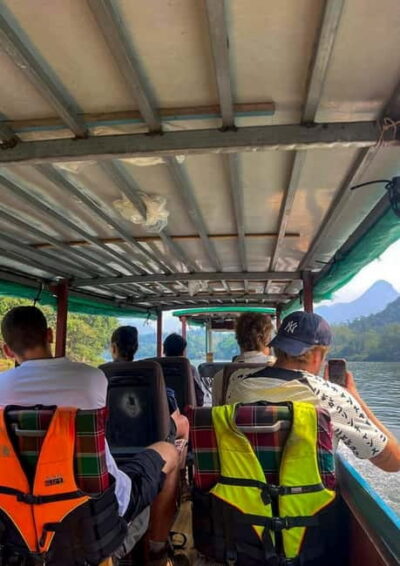
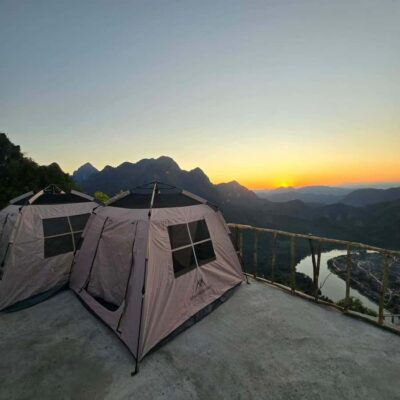
Overnight Camping At nong khiaw view point, 360 view
Read our review →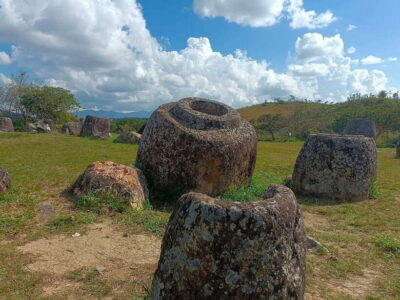
Browse the lists this tour appears in