
Reviewed · CITY TOURS
Private Luang Prabang City Tour
Luang Prabang reveals itself best in layers: first in the quiet before sunrise, then through its market, temples, royal buildings, and river views. This private day tour gives you that full sweep with an English-speaking local guide and an air-conditioned car, a welcome break from the heat.
I like the early alms procession and the chance to see the town before its streets fill. I also like the private format, since your guide can explain the mix of Lao Buddhist and French colonial culture without forcing your group to match a stranger’s pace.
The main drawback is the long day. Pickup is listed around 5:15 am from March to October and 5:45 am from November to February, while the meeting information also gives a 9:00 am start. Confirm the exact pickup time before booking, and expect entrance fees and lunch to cost extra.
Key points to know before booking
- Monk alms procession at dawn: Begin early with one of Luang Prabang’s most meaningful daily traditions.
- Private transport all day: Ride in an air-conditioned vehicle with only your group and an English-speaking local guide.
- Nine major stops: Cover the market, old quarter, riverside meeting point, temples, palace, UXO Centre, and Mount Phousi.
- Museum and temple fees are extra: Budget about $5 to $10 for each paid site, plus lunch.
- Important closure dates: The Royal Palace Museum closes on the last Thursday of each month, and the UXO Lao Visitors Centre is closed Saturday and Sunday.
- Best for first-time visitors: This is a full orientation to Luang Prabang, not a slow, specialized temple walk.
Why this private Luang Prabang day works well
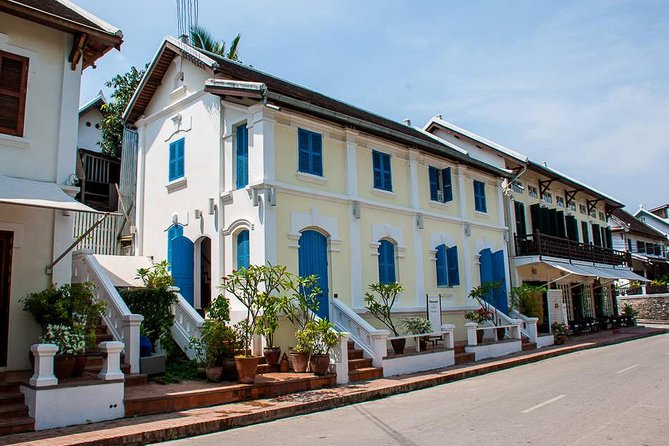
Luang Prabang is compact, but its sights tell very different stories. You can move from a quiet Buddhist temple to a former royal residence, then from French colonial streets to an information centre about unexploded ordnance left by the Second Indochina War.
A private tour is useful here because the day begins early and covers a lot. You are not waiting for a large group at every doorway, and your guide can give more attention to questions about religion, architecture, royalty, and modern Laos.
The trip lasts about 10 to 11 hours. That makes it a strong choice if you have only a short stay in town. If you have several days in Luang Prabang, you may prefer to split the same sights across two slower days.
The operator, Asia Package Travel, provides private transportation and an English-speaking local licensed guide. Available feedback connected with the operator praises organized visits, punctual transport, considerate service, and guides who adjust plans to the group and conditions. Some of those comments concern wider Laos trips rather than this exact city tour, so I would treat them as a general service signal rather than a guarantee about every stop.
More luang prabang city tours in Luang Prabang:
- Luang Prabang City Tour & Kuang Si Waterfalls
★ 4.5 · 87 reviews - Small Group Half Day Luang Prabang city tour
★ 4.5 · 57 reviews - Private Luang Prabang City Tour
★ 5.0 · 27 reviews
Starting before sunrise with the alms procession
The day opens very early. Pickup is listed at about 5:15 am from March through October and 5:45 am from November through February. The purpose is to see monks receiving alms at sunrise, a daily Buddhist practice that has become one of Luang Prabang’s defining sights.
This is not a stage show. Monks walk in quiet lines while local people offer food. The value of having a guide is context and timing, especially if you have never seen the practice before. You can watch, learn, and avoid treating a religious ceremony as a photo opportunity.
The early hour is also the hardest part of the schedule. If you are still recovering from a late arrival or a long journey, the first stop may feel demanding. Still, it gives you a side of Luang Prabang that disappears once the regular sightseeing day begins.
There is a practical detail to settle before departure. The tour information gives both an early-morning pickup schedule and a 9:00 am meeting time. Ask Asia Package Travel which applies to your hotel and travel month. Do not assume the 9:00 am time replaces the dawn pickup.
The morning market near the Royal Palace
After the alms procession, you visit Luang Prabang’s morning market. It occupies a few quiet streets beside the Royal Palace and is largely finished by mid-morning.
This is a good market for orientation rather than a major shopping mission. The early start lets you see the town at its most local and unhurried. You may find food, household goods, and everyday produce arranged along the side streets, though the supplied tour details do not promise specific products or tastings.
The stop lasts about an hour and has no admission charge. Keep it in perspective: the market is brief, but it helps you understand that Luang Prabang is more than a collection of temples for sightseers.
Four hours in the UNESCO-listed old quarter
The largest part of the day is devoted to Luang Prabang’s old quarter, with about four hours scheduled for exploring. The town became a UNESCO World Heritage Site because Lao traditions and European colonial influences remain closely mixed in its architecture and culture.
This extended block is the heart of the tour. You can see how the old capital of the Lane Xang kingdom developed while French colonial buildings shaped its streets and public architecture. Your guide supplies the thread connecting the buildings, temples, royal institutions, and religious life.
The advantage is breadth. Rather than visiting one temple and heading straight back to your hotel, you get time to understand how the peninsula fits together. The possible weakness is that four hours of walking and sightseeing, after a pre-dawn start, can feel full. Comfortable shoes and water will matter, though water is not listed as an inclusion.
Admission to the old quarter itself is not listed as included. Individual temples and museums also cost extra, generally about $5 to $10 per place according to the tour information. Carry Lao kip or confirm accepted payment methods with the operator before setting out.
A few more Luang Prabang trips to weigh up
- Luang Prabang Private Minivan
★ 4.5 · 36 reviews - Private Tour Full-day Morning Market, Villages and Scenic Kuang Si Waterfall
★ 4.5 · 22 reviews - Luang Prabang Private Airport transfers
★ 4.0 · 22 reviews - Private Tour: Pak Ou Cave and Kuang Si Waterfall Tour from Luang Prabang
★ 5.0 · 16 reviews
Where the Mekong meets the Nam Khan
The Nam Khan stop takes you to a small park at the end of the peninsula, where the Nam Khan and Mekong rivers meet. The visit is scheduled for about 30 minutes.
This is a short pause, but it gives you a clear sense of Luang Prabang’s geography. The old town sits between two rivers, and that position explains much of its shape and its calm riverside character.
The tour does not promise a boat ride or a meal here. Think of it as a scenic orientation point and a chance to slow down between historic stops. Since the riverside setting is open and exposed, conditions may affect how comfortable the stop feels.
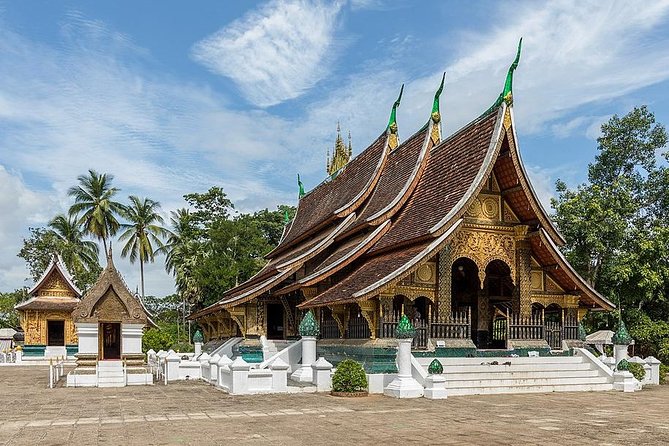
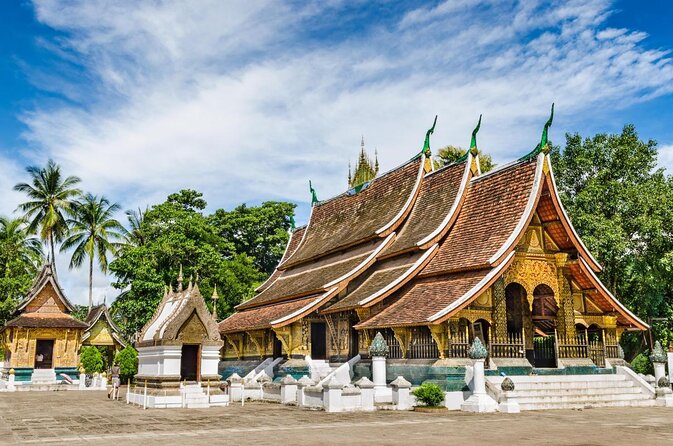
Wat Xieng Thong, the Temple of the Golden City
Wat Xieng Thong is one of the day’s essential temple visits. It sits near the peninsula’s tip, close to the river confluence, and was once known as the Temple of the Golden City.
The name reflects the temple’s importance to Luang Prabang. Its setting and architecture make it a useful place to discuss how Buddhism, royal power, and local design meet in the old capital. The scheduled visit lasts about 30 minutes, so you will get an introduction rather than a long period for quiet study.
Admission is not included. Dress and behavior should be respectful at every temple, and your guide can help explain local expectations. If temple architecture is your main interest, you may wish the schedule allowed more time here, but the short visit makes sense in a day that covers so much ground.
Wat Sensoukharam and its 100,000 stones
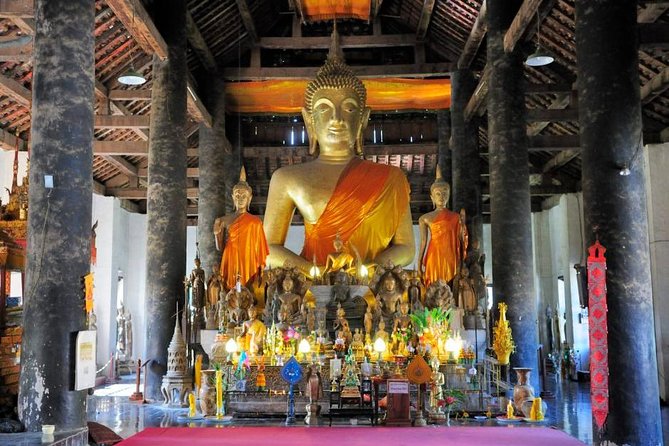
Wat Sensoukharam was built in 1718 by King Kitsarath. Its name means Temple of 100,000 Treasures, and the temple is associated with 100,000 stones from the Mekong River.
The stop is scheduled for an hour, longer than the visit to Wat Xieng Thong. That gives your guide room to explain the temple’s name, age, and place in Luang Prabang’s religious life without rushing you through the grounds.
Admission is extra. This is another reason to budget beyond the $100 tour price. The tour price covers the private vehicle and licensed English-speaking guide, but not the entrance charges at temples and museums.
The Royal Palace Museum and its monthly closure
The Royal Palace Museum occupies the former royal residence, built by French colonialists between 1904 and 1909. It is now a national museum, offering a different view of Luang Prabang from the temples.
Here, the focus shifts from religious architecture to the city’s royal and political past. The museum helps explain how Lao monarchy and French influence occupied the same physical setting. The visit is scheduled for one hour, enough for a useful introduction if your guide points out the most important parts.
There is one firm planning issue: the museum is closed on the last Thursday of every month. It cannot be visited on that day, so check your date before paying for the tour. Admission is not included, and the tour does not promise a replacement stop if the museum is closed.
The UXO Lao Visitors Centre
The UXO Lao Visitors Centre brings the day into modern history. Its exhibits explain the damage Laos continues to suffer from unexploded ordnance left by the Second Indochina War.
This may be the most sobering stop. It adds necessary context to a country often presented only through temples, rivers, and traditional culture. The visit is scheduled for 30 minutes, which is brief but enough to introduce the issue and its continuing effects.
The centre is closed on Saturdays and Sundays. Plan carefully, since this closure is separate from the Royal Palace Museum’s monthly closure. Admission is not included.
Wat Wisunarat and the watermelon-domed stupa
The itinerary describes an oldest Buddhist temple dating to the 16th century, known for its large watermelon-domed stupa. This is Wat Wisunarat, a useful contrast to the more ornate temple architecture elsewhere in town.
The stop lasts about 30 minutes. Its appeal is historical age and the unusual shape of the stupa rather than a long guided visit. The tour information lists the entrance fee as 30,000 kip, while also marking admission as free in another part of the schedule. That inconsistency is worth clarifying with the operator before departure.
As with the other religious sites, the guide’s explanation is important. A quick look at a distinctive dome means more when you know why it matters and how it differs from other structures in Luang Prabang.
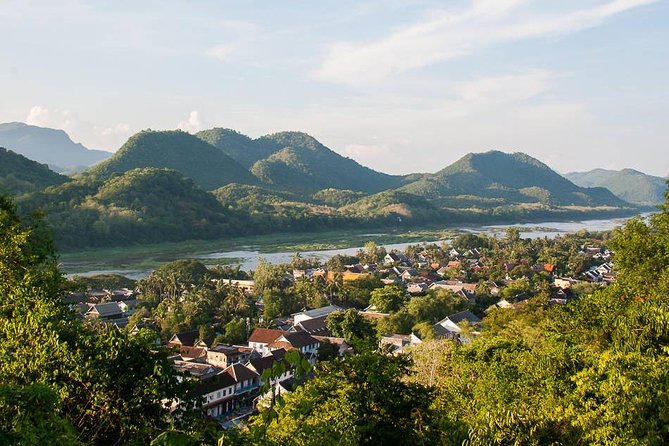
Mount Phousi and the town from above
Mount Phousi rises about 100 meters in the centre of the old town, between the Mekong and Nam Khan rivers. It is the highest point in town and is known for panoramic views.
The climb gives the day a strong finish. After seeing the peninsula from street level, you can look back over the town and understand its compact form. The tour schedules about 30 minutes here, so this is a viewpoint stop rather than a long hill walk.
Admission is not included. The itinerary does not give the exact number of steps or describe the route in detail, so ask if you have concerns about walking or climbing. After a day that began before dawn, the climb may feel more tiring than it sounds.
What the $100 price really covers
At $100 per person, this is not the cheapest way to see Luang Prabang’s central sights. Its value depends on how many people are in your private group and how much you value time, comfort, and explanation.
The price includes private transportation and an English-speaking local licensed guide. It does not include lunch or admission to temples and museums. With several paid stops, your final cost will be higher than the advertised rate.
I see the strongest value in three situations. You are short on time, you want a private vehicle during a 10 to 11-hour day, or you want one person to connect the town’s religious, royal, colonial, and wartime stories.
For one person or a couple, the per-person cost may feel high. Group discounts are offered, so the math improves when several people share the private vehicle. Since the tour is private, only your group participates, which also gives you more control over pauses and questions.
Lunch is not included, and no restaurant is specified. Ask how the midday break is handled, particularly because the schedule begins early and runs most of the day.
Who should book this day tour?
I would choose this tour for a first visit lasting only a day or two. It covers the main cultural sights and gives you a useful map of the old town before you decide where to return on your own.
It also suits families or small groups who want a private vehicle and do not want to manage every temple, museum, and riverfront stop alone. The air-conditioned transport matters in a hot climate and after the early start.
This is less suited to someone who prefers a slow pace. The schedule is broad, and several stops last only 30 minutes. It is also not ideal if you want a full day focused only on Buddhist art, food, markets, or photography.
The dawn procession requires planning, and the total day is long. Confirm the pickup time, museum opening dates, temple charges, and lunch arrangement before you commit.
Should you book the Private Luang Prabang City Tour?
Book it if you want a single, well-packed day that explains Luang Prabang beyond its postcard views. The combination of dawn alms, morning market, old quarter, temples, Royal Palace Museum, UXO Centre, and Mount Phousi gives you a clear first look at the city.
Skip it if you have plenty of time and would rather divide these sights into shorter outings. The $100 price is easier to justify with a group, and the extra entrance fees and lunch should be part of your budget.
My final advice is simple: confirm the conflicting start times and check the Royal Palace and UXO Centre closure days before booking. If those details work for your dates, the private format offers a comfortable and efficient way to understand Laos’s cultural heart.
FAQ
How long does the Private Luang Prabang City Tour last?
The tour lasts approximately 10 to 11 hours.
What time does pickup begin?
Pickup is listed at about 5:15 am from March to October and 5:45 am from November to February. The meeting information also states a 9:00 am start, so confirm the exact time with Asia Package Travel before the tour.
Is hotel pickup available?
Pickup from your accommodation is offered.
Is this a private tour?
Yes. Only your group participates in the activity.
What transportation is provided?
Private transportation in an air-conditioned automobile is included.
Is a guide included?
An English-speaking local licensed tour guide is included.
Are temple and museum entrance fees included?
No. Admission to temples and museums is extra, generally about $5 to $10 for each place. The itinerary also gives an entrance fee of 30,000 kip for one temple.
Is lunch included?
No. Lunch is not included in the tour price.
When is the Royal Palace Museum closed?
The Royal Palace Museum is closed on the last Thursday of every month.
When is the UXO Lao Visitors Centre closed?
The UXO Lao Visitors Centre is closed on Saturdays and Sundays.
Just added around Luang Prabang
- The Namkhan – Yoga Class (8 am or 4 pm)★ 4.0 · 5 reviews
- Unwind with a Sunset Cruise on the Mekong River★ 5.0 · 4 reviews
- Private Tour: Half-Day City Tour of Luang Prabang★ 4.5 · 4 reviews
- Sunset Cruise in Luang Prabang with Live Performance★ 4.5 · 3 reviews
- Luang Prabang’s Beauty & Heritage in 1 Day – All-Inclusive Tour★ 5.0 · 6 reviews
- Luang Prabang Foodie Walking Tour and Monk Blessing★ 5.0 · 7 reviews
- Luang Prabang Night-time Explorer★ 3.5 · 3 reviews
- Laos Buffalo Dairy Tours Interact, Learn and Taste Fresh Flavors★ 5.0 · 6 reviews
City Tours, compared.
Vientiane City Highlights Tour with Buddha Park & Lunch
Read our review →
Private Tour: Vientiane City Tour Full Day with Buddha Park
Read our review →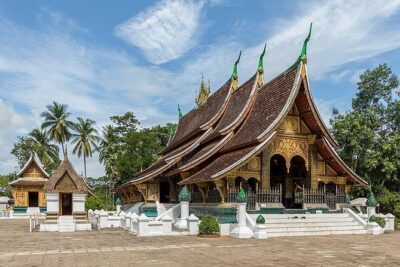
Browse the lists this tour appears in