
Reviewed · CITY TOURS
Vientiane Half-Day City Tour
Vientiane’s best sights are spread through a quiet, easygoing capital, and this four-hour small-group tour links them neatly. You’ll see ancient temples, the French-era Presidential Palace, the gold of That Luang, and the sobering COPE visitor center without having to sort out transport.
I like the choice of a 9:00 am or 2:00 pm departure, and I like the small maximum of seven people. Guides such as Mr Go, Parn, Lotty, and Xaiixana Mahavong have been praised for clear explanations and warm care. The main caution is timing: although the tour is sold as about four hours, some departures have lasted closer to two hours, or three and a half.
Key points at a glance
- Wat Sisaket keeps its thousands of small Buddha figures in cool, teak-covered corridors.
- COPE adds serious context, explaining the continuing effects of unexploded ordnance in Laos.
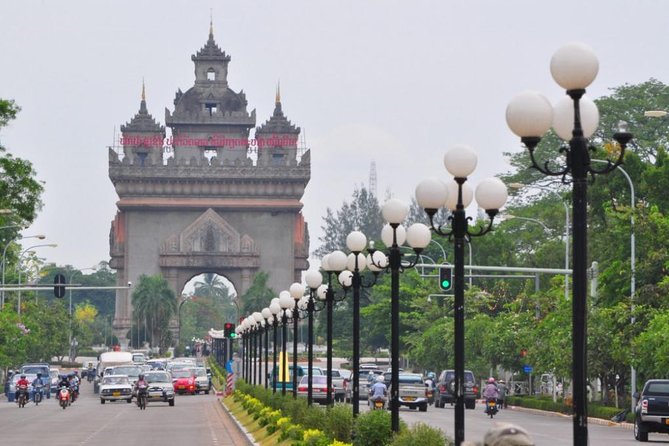
- Patuxay gives you a rooftop city view after a climb up its interior stairs.
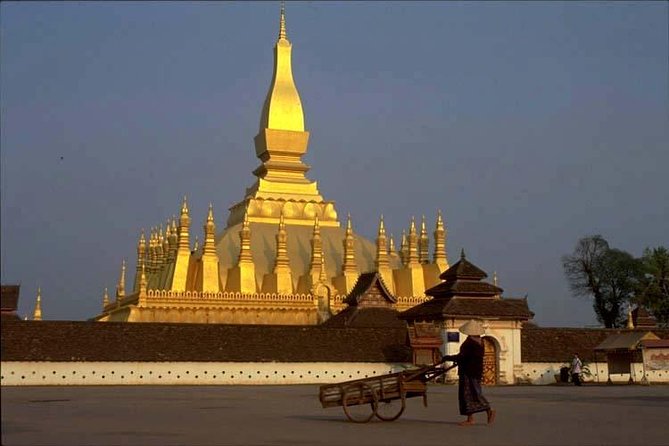
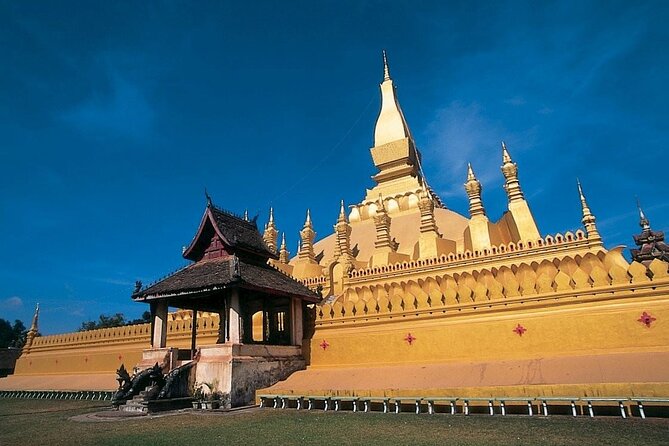
- That Luang is the spiritual centerpiece, with its tall golden stupa.
- Groups are capped at seven, making questions and conversation easier.
- Hotel pickup, air-conditioned transport, and return service are included, but food and drinks are not.
A practical introduction to Vientiane in four hours
Vientiane can feel almost sleepy compared with many Southeast Asian capitals. That is part of its appeal, but it also means the city’s landmarks are not always presented in one obvious sightseeing route. This tour gives you a useful first look at the capital, combining Buddhist temples, royal and colonial buildings, modern civic monuments, war history, and the Mekong waterfront.
You are collected from your Vientiane hotel at 9:00 am for the morning option or 2:00 pm for the afternoon option. An English-speaking guide accompanies you in an air-conditioned vehicle. The group limit is seven people, so you should have more room to ask questions than on a large bus tour.
The tour is aimed at first-time visitors who want orientation rather than a long, highly specialized study of one subject. You will see the main sights, hear about Lao culture and politics, and get a feel for how the center of Vientiane fits together.
One point deserves attention before you book. The stated duration is approximately four hours, but the exact length seems to depend on the pace of the day. Some departures have been reported at around three and a half hours, while another was described as lasting a little more than two. If you need every minute of a planned four-hour program, confirm the timing with the provider before paying.
A few more Vientiane trips to weigh up
- Vientiane: Half-Day City Tour with Patuxai and Buddha Park
★ 4.5 · 57 reviews - Half-Day Vientiane City Bike Tour | Laos
★ 5.0 · 5 reviews - Vientiane: Half-Day City Tour – Morning or Afternoon
★ 4.0 · 3 reviews
Wat Sisaket and the quiet beauty of old Vientiane
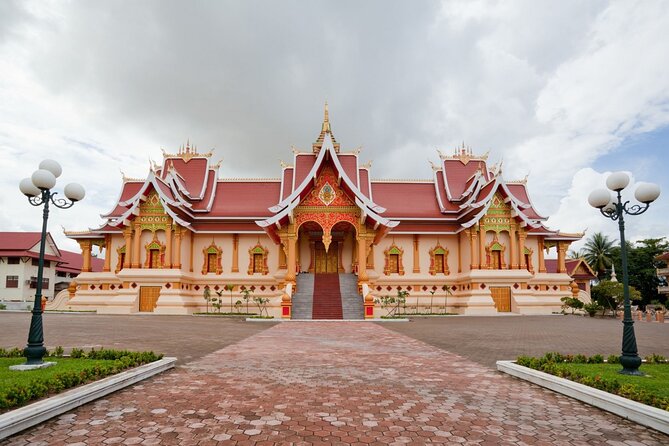
The first stop is Wat Sisaket, often presented as the oldest temple in Vientiane left intact after the Siamese invasion of 1828. Its survival gives the site unusual importance, but the mood is not grand or crowded. The temple is valued for its calm setting and its covered teak corridors.
Look closely at the walls and alcoves. They hold thousands of miniature Buddha figures, creating a repeated pattern that is easy to miss if you rush through. The shaded walkways also make this a comfortable opening stop, especially during a hot morning or afternoon.
Your guide’s explanation matters here. A temple can look lovely while its meaning remains unclear, and this is one place where historical context helps. Guides named Mr Go, Parn, Lotty, and Xaiixana Mahavong have each been praised for making the sites understandable and for answering questions about Lao culture and the country’s past.
The main limitation is that the quality of the explanation can vary with the individual guide. One account described a friendly and helpful guide whose English was limited, making the temple visit less informative than expected. Since the tour price is $89 per person, clear communication is an important part of its value.
Wat Phra Keo and the former governor’s palace
The route continues to nearby Wat Phra Keo, now used as a religious museum. The collection includes Lao and Khmer art, so this stop broadens the visit beyond one temple and gives you a chance to compare artistic traditions.
You should think of Wat Phra Keo as a museum visit rather than a functioning place of worship. The value comes from the objects and the explanation around them. Ask your guide about the differences between Lao and Khmer work if that interests you, since the small group format should make a short conversation possible.
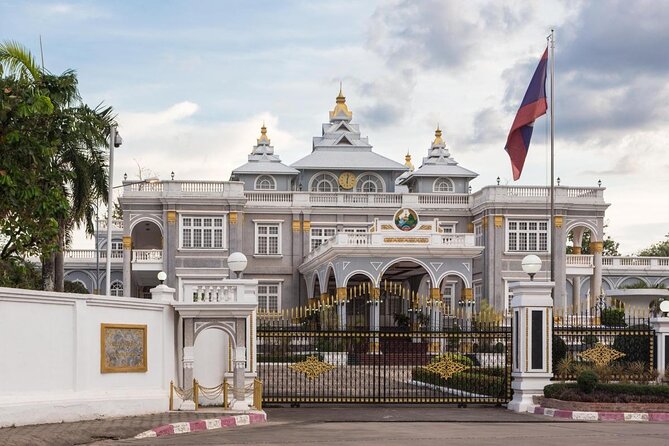
The nearby Presidential Palace adds another layer. You cannot go inside, but the exterior offers a glimpse of Vientiane’s colonial past. The building formerly served as the French governor’s palace, and that former use helps explain why the city center has a mix of Buddhist architecture, French influence, and modern government buildings.
This is a quick visual stop, not a palace tour. If you expect grand rooms or an interior visit, you may find it brief. If you are interested in how colonial power shaped the capital, it is a useful piece of the larger story.
COPE brings the hardest history into focus
The visit to COPE is one of the most important parts of the morning or afternoon. The center works to help people affected by landmines and unexploded ordnance, commonly called UXO, left behind by the American and Vietnam War period.
This stop changes the tone of the tour. The temples and monuments show you Vientiane’s religious and civic identity, while COPE explains a problem that still affects lives in Laos. You receive information about the war, the danger from unexploded weapons, and current efforts to clear contaminated areas and help victims.
I value the inclusion of COPE because it prevents the tour from becoming a string of attractive buildings with no difficult context. You are given a chance to understand why recent history remains part of daily life in Laos.
Allow yourself time to pay attention here. The subject is serious, and it may be the stop you remember most clearly. The supplied tour details do not specify how long you stay, so the depth of the visit may depend on the day’s pace and the guide’s presentation.
Same river towns, a completely different day out:
- Vientiane Cultural Tour with Private Guide
★ 5.0 · 80 reviews - Vientiane: Cultural Tour with Buddha Park and Patuxay
★ 4.6 · 74 reviews - Vientiane Cuisine & Culture: The Hungry Tuk Tuk
★ 4.5 · 53 reviews - Vientiane City Highlights Tour with Buddha Park & Lunch
★ 4.7 · 38 reviews
Patuxay, Vientiane’s answer to the Arc de Triomphe
Next comes Patuxay, the large monument often compared with Paris’s Arc de Triomphe. The comparison is useful as a quick reference, but Patuxay has its own Lao character and place in Vientiane’s civic identity.
The practical reward is the rooftop. You can climb the stairs inside the monument for broad views across the city. This is not a lift-assisted viewpoint, so anyone with limited mobility should take the climb into account. The tour information says most people can participate, but it does not promise an alternative route to the top.
From above, you get a better sense of Vientiane’s scale and relatively low-rise character. It is a good moment to connect the separate stops you have visited and understand the city as a whole rather than as isolated monuments.
Plan for a little heat and effort during the climb. The payoff is a city view and a closer look at the monument’s structure. Your guide can also help place Patuxay within the capital’s modern story, rather than treating it as only a photo stop.
That Luang and the golden heart of Laos
That Luang is the tour’s grandest religious sight and the holiest site in Laos. Its tall golden stupa catches the light and gives the stop an immediate sense of importance.
The monument was constructed by King Setthethirat in the 16th century. That date places it within the period when Lao rulers were shaping Vientiane as a major political and religious center. Even if you know little about Lao history, the scale and color of That Luang make it easy to understand why it carries such weight.
This stop is mainly about seeing and absorbing the monument. Listen for the details your guide adds about its religious role and construction. The experience is stronger when you take a moment to look at the full form of the stupa, not only the golden surface through a camera screen.
That Luang also gives the tour a strong visual finish before the final river stop. Because opening conditions and exact visiting time are not specified, ask your guide about the available time if you want a slower look.
The Mekong River closes the day gently
The final stop is along the Mekong River. You can stroll beside the water, stop for a cold drink, or try a snack from one of the local food stalls. Food and drinks are not included in the tour price, so bring cash if you want to buy something during this final break.
This is a welcome change after the temples, museum, and monuments. The riverfront lets you watch ordinary city life and finish the tour at an unhurried pace. It also gives you a chance to ask your guide any last questions about Vientiane.
The stop is not presented as a full meal or an organized food tasting. Think of it as free time with local buying options. If you want a substantial lunch or dinner, arrange that separately.
Afterward, you are transferred back to your hotel. That return ride is useful in Vientiane’s heat, and it means you do not have to find a taxi from the riverfront.
What the guide and vehicle add to the price
At $89 per person, this is not the cheapest way to look around Vientiane. The value depends on what you need. If you are comfortable arranging local transport and reading about the sights yourself, the price may feel high for a half-day outing.
You are paying for more than entry to a set of attractions. The package includes hotel pickup and drop-off, an air-conditioned vehicle, a professional English-speaking guide, and a group capped at seven. That combination is useful in a city where the biggest gain is not simply getting from one monument to the next, but understanding what you are seeing.
The guide can also make the difference between a pleasant circuit and a useful introduction. Several guides have been praised for strong English, good explanations, safety-conscious driving arrangements, and extra help during the day. Mr Go was noted for making the tour both informative and easy. Parn was described as friendly and accommodating, while Lotty was praised for answering many questions. Xaiixana Mahavong handled a last-minute booking and was singled out for strong knowledge of the sites.
Still, the experience is not guaranteed to be identical every time. One weaker account centered on limited English and a lack of detail. For this reason, the small group is helpful, but the individual guide remains the key variable.
Morning or afternoon: choosing the better departure
The morning tour begins at 9:00 am, and the afternoon tour begins at 2:00 pm. Pick the morning if you want to continue sightseeing or have a quieter evening by the Mekong. It also gives you more flexibility if you are using Vientiane as a short stop between other destinations.
The afternoon option works well if you arrive late in the morning, prefer a slower start, or have another activity before lunch. It ends later in the day, so the riverfront portion may offer a different feel from the morning departure.
Both choices cover the same general route according to the supplied details. The tour is available as a mobile ticket, and pickup is offered from hotels in Vientiane. You must provide a contact phone number when booking, which helps the operator coordinate transport.
The minimum age is 12, and the maximum is seven people. Most people can participate, but the stairs at Patuxay are worth considering if climbing is difficult.
Who should book this Vientiane tour?
I would choose this tour for a first visit, especially if I had only a day or two in Vientiane. It covers the main sights without asking you to spend a full day in a vehicle, and it includes COPE, which many independent sightseeing plans might skip.
It also suits you if you want cultural and historical explanation rather than a simple transfer between monuments. The best guides add useful detail about religion, politics, art, colonial rule, and the war’s continuing effects.
You may want another option if you prefer a very slow temple visit, a dedicated food tour, or a precise four-hour schedule. You should also think carefully about the price if you are traveling alone and are comfortable using local transport. The tour becomes easier to justify when you value hotel service, air conditioning, a small group, and a guide who can answer questions.
Free cancellation is available if you cancel at least 24 hours before the start time. Changes or cancellations inside that window are not refunded, and the provider may offer a different date or a full refund if the minimum number of participants is not reached.
Should you book it?
Book this Vientiane city tour if you want a well-planned first look at the capital, with the major temples, Patuxay, That Luang, the Mekong, and the serious context of COPE in one outing. The strongest reasons are the small group, hotel transport, and the chance of an excellent guide such as Mr Go, Parn, Lotty, or Xaiixana Mahavong.
Before booking, confirm the expected duration and ask about the guide’s English if detailed commentary is especially important to you. At $89, the tour is best value for a short stay, first-time orientation, or anyone who prefers comfort and structure over arranging each stop alone.
FAQ
How long is the Vientiane city tour?
The tour is advertised as approximately four hours. Actual departures can vary, with some lasting around three and a half hours and another described as a little more than two hours.
What departure times are available?
The morning departure begins with hotel pickup at 9:00 am. The afternoon departure begins at 2:00 pm.
Which sights are included?
The route includes Wat Sisaket, Wat Phra Keo, the Presidential Palace exterior, COPE, Patuxay, That Luang, and the Mekong River waterfront.
Is hotel transportation included?
Yes. Hotel pickup and drop-off in Vientiane are included, along with transport in an air-conditioned vehicle.
How many people can join the tour?
The maximum is seven people per booking and seven people for the activity. The minimum age is 12.
Are food and drinks included?
No. Food and drinks are not included, although you can buy a cold drink or a snack from local food stalls beside the Mekong.
Just added around Vientiane
- Vientiane: Lao Cultural Attire Rental Experience★ 5.0 · 3 reviews
- Vientiane Private Lao Cooking Class with Market Tour★ 4.0 · 3 reviews
- Vientiane IG tour & Patuxay monument★ 5.0 · 5 reviews
- Vientiane : Private Custom Tour with a Local Guide★ 5.0 · 6 reviews
- Vientiane classic Food tour ( Included Food )★ 4.2 · 6 reviews
- Vientiane: Half-Day City Tour – Morning or Afternoon★ 4.0 · 3 reviews
- Vientiane: Art, Culture, & Inspiration Guided Day Tour★ 5.0 · 3 reviews
- Vientiane Private Walking Tour With A Guide (Private Tour)★ 4.5 · 3 reviews
City Tours, compared.
Vientiane City Highlights Tour with Buddha Park & Lunch
Read our review →
Private Tour: Vientiane City Tour Full Day with Buddha Park
Read our review →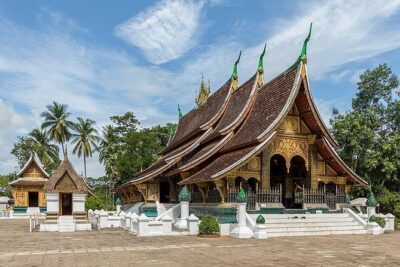
Browse the lists this tour appears in