
Reviewed · LUANG PRABANG TOURS
Living Land Rice Farming Experience
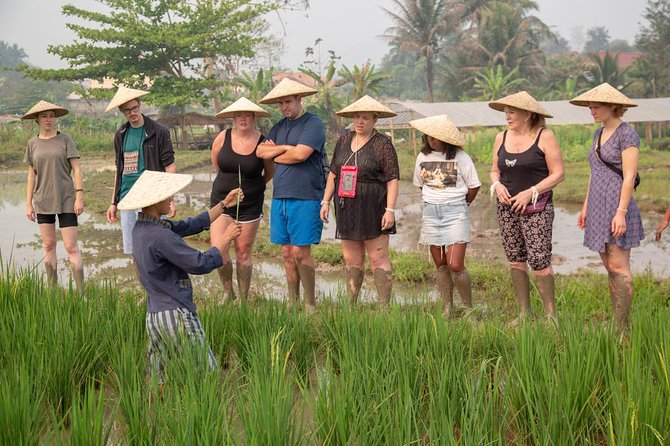
The most memorable part of Living Land Farm is getting your feet into the paddy and taking part in the full rice cycle, from preparing the soil to planting, harvesting, and cooking. You do not just look at a rice field from a roadside. You work in it, often knee-deep in mud.
I like the mix of practical work and village culture, especially the water buffalo plowing, bamboo weaving, sugar cane pressing, and blacksmithing. I also like that farm income helps more than 60 local students with their studies and funds free English classes for the village.
The main caution is the booking value. The experience is listed at about $64.17 per person, and one family reported paying more through an online intermediary than by booking directly with the farm. Also, confirm whether your chosen option includes lunch, since the package details vary.
Key points at a glance
- Fourteen stages of rice production: Work through planting, transplanting, harvesting, processing, and cooking rather than seeing only one farm task.
- Mud is part of the deal: Wear shorts and clothes you can wash. Several activities take place barefoot in wet rice fields.
- A real community purpose: Proceeds support more than 60 students and free English lessons for local residents.
- Guides bring the work to life: Johnny, Kham, Sai, and Geo are named as especially strong guides, with family stories and clear instruction.
- Lunch can be worth adding: The meal features typical Luang Prabang dishes and fruit, but check your selected booking option.
- Allow about five hours: The farm program itself lasts around 3 hours and 20 minutes, with the rest of the time used for transport and the meal.
Why this rice farm feels different from a normal Luang Prabang tour
Luang Prabang is easy to enjoy from temple courtyards, café tables, and river viewpoints. Living Land Farm takes you a short distance outside town and shows the work behind one of Laos’s most important foods.
Rice farming is often presented as a simple process: plant the rice, wait, then harvest it. Here, you see how many separate jobs are involved. The farm program works through the stages from seed to table, giving you a clearer sense of the labor behind an ordinary bowl of rice.
That practical approach is the reason I find this experience more useful than a standard countryside drive. You are not simply told that farming is hard. You are asked to help prepare a field, plant rice, handle the harvest, and take part in processing and cooking.
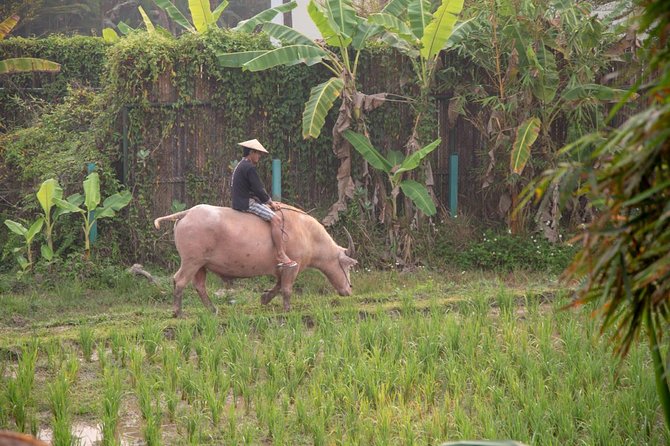
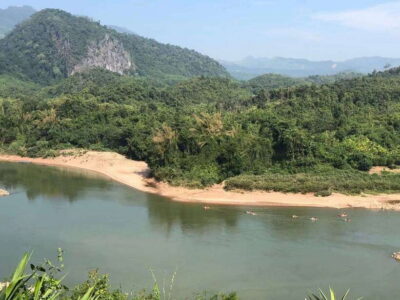
The setting helps, too. The community farm looks across rice fields toward mountains, and the rural surroundings make a welcome change from the center of Luang Prabang. The program is educational, but it is not built like a classroom. You learn by doing.
A few more Luang Prabang trips to weigh up
- Luang Prabang: Farm Tour and Buffalo Buffet Adventure
★ 4.7 · 11 reviews - Luang Prabang: Organic Farm Experience & Hike to Kuang si
★ 4.4 · 4 reviews - Luang Prabang: Bamboo Forest Cooking-class & Farm Visit
★ 5.0 · 3 reviews
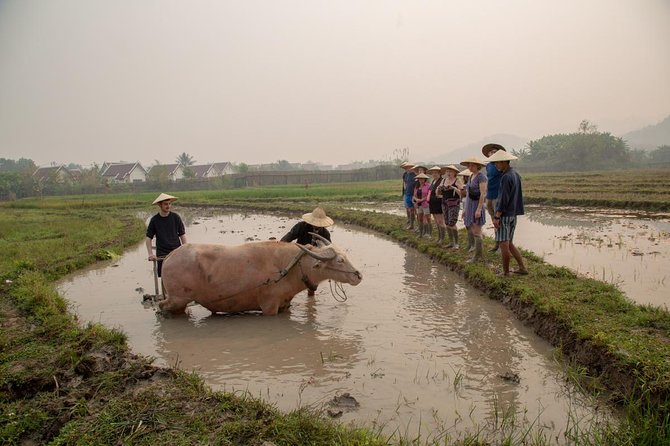
Preparing the paddy with a water buffalo
The morning begins at about 8:00 a.m., with the half-day farm program starting around 8:30. The exact feel of the day depends on the season and the condition of the fields, but rice is planted throughout the year, so the farm can show active work at different points in the growing cycle.
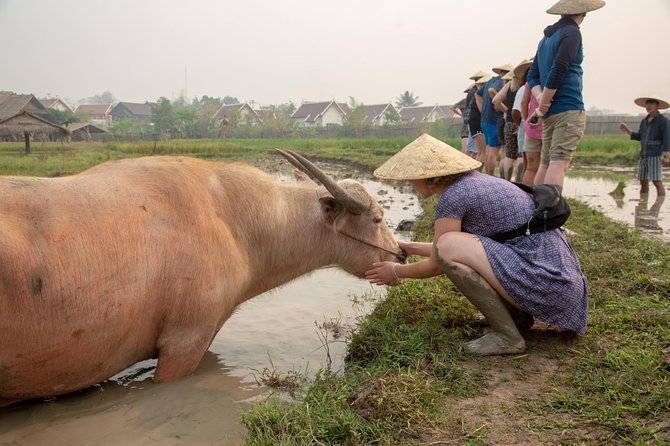
One of the most memorable jobs is preparing the soil with a water buffalo. You may help guide the animal through the field and work in the soft mud behind it. The buffalo used for this activity are described as gentle, and the animal gives you a direct sense of how farming was done before machines became common.
This is also where practical clothing matters most. You will likely remove your shoes and work barefoot. Shorts, washable clothing, and a willingness to get dirty are sensible choices. Do not arrive dressed for a temple visit or an expensive lunch.
The muddy work is not a token photo opportunity. The experience is designed to let you try the physical tasks for yourself. That makes it especially good for families, curious adults, and anyone who wants a closer look at rural life rather than another sightseeing stop.
Planting, harvesting, and the fourteen steps of rice
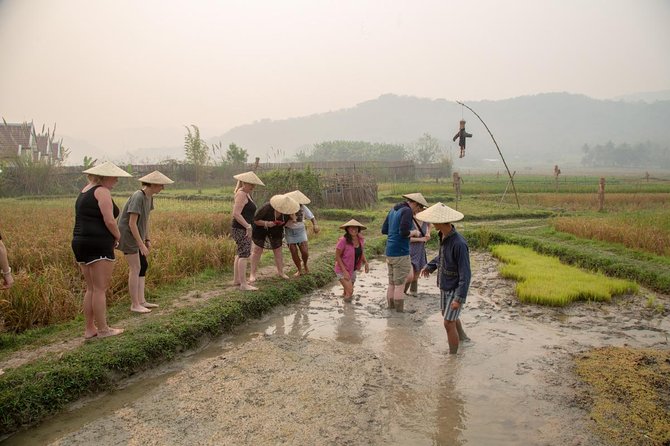
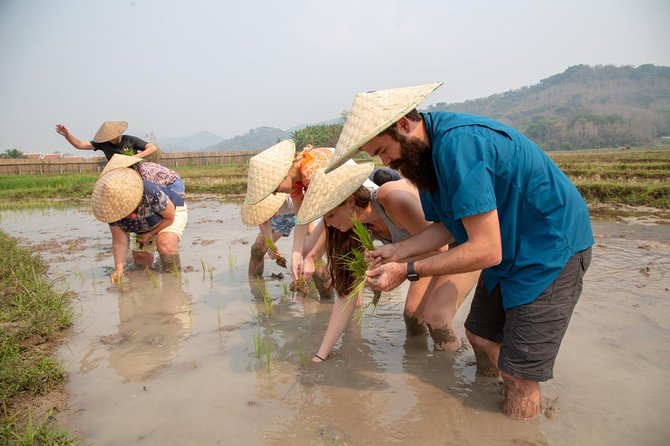
After preparing the field, the program moves through planting and transplanting. You learn how rice begins as seed and how young plants are placed in the paddy. The work is repetitive, careful, and more demanding than it first appears.
The useful lesson here is scale. A few minutes of planting can seem easy when you are doing it as a short activity. The process becomes very different when you consider a family depending on the crop for food and income.
The farm also demonstrates harvesting and the later steps that turn rice into something ready for sale and the table. You may handle harvested rice and see how it is prepared. The program includes rice-based snacks at the end, which gives you a tasty finish after the physical work.
I like this sequence because it connects each task. You can see that rice is not simply grown and collected. It must be planted, tended, harvested, processed, cooked, and served. That chain is the heart of the experience.
Guides such as Johnny, Kham, Sai, and Geo are named for their strong instruction and friendly manner. Johnny is also described as sharing family stories, which adds useful context to the work. If the guide varies on your date, the quality of the explanation may vary slightly, but the program itself remains hands-on.
Bamboo, sugar cane, and blacksmithing
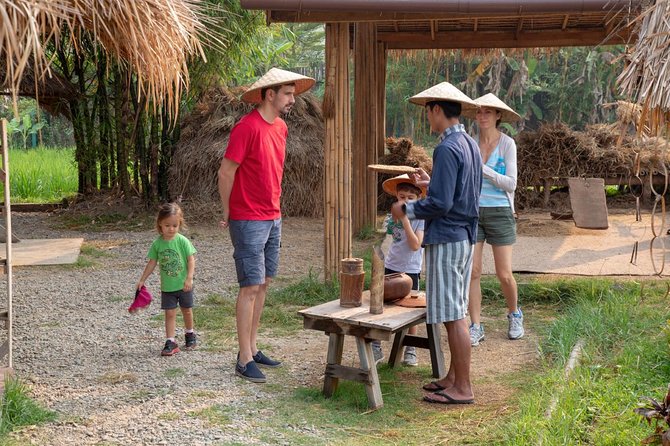
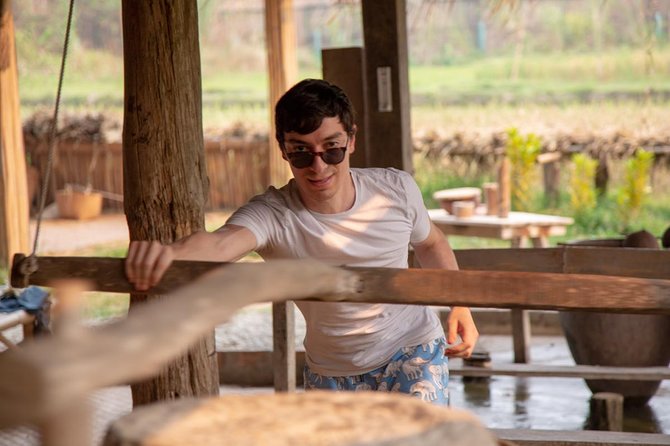
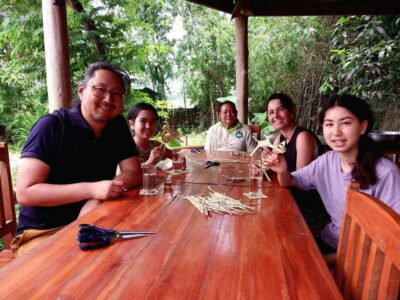
Rice is the main subject, but the farm adds several activities that broaden the picture of village life. Bamboo weaving shows how a common local material becomes useful household and farm items. The task gives you something quieter to do after working in the paddy.
Sugar cane pressing is another short demonstration and hands-on activity. It is a simple way to see how a crop becomes a drink or sweet treat with basic tools and physical effort.
Blacksmithing adds a look at the making and repair of tools. It helps explain how farming communities maintain the equipment they depend on. These sections are not as extensive as the rice work, so think of them as supporting activities rather than separate workshops.
One activity involving a person named Bentley did not appeal to every participant and was described as unnecessary. That is a minor point, but it is worth knowing if you prefer a tightly focused farm program. Most of the day centers on rice and traditional work.
Same river towns, a completely different day out:
- Luang Prabang: Cruise to Pak Ou Caves & Kuang Si Waterfalls
★ 5.0 · 1,769 reviews - Luang Prabang: Cruise to Pak Ou Caves & Kuang Si Waterfalls
★ 4.8 · 1,360 reviews - Half Day Mekong Cruise to Pak Ou Caves (Morning / Afternoon)
★ 4.6 · 290 reviews - Luang Prabang: UNESCO World Heritage City Highlights Tour
★ 4.6 · 201 reviews
The Luang Prabang lunch and rice snacks
After the farm activities, you can have a meal featuring typical Luang Prabang dishes and fruit. The lunch is a useful part of the cultural experience because it connects the farm work to the food on your plate.
I would include lunch if your schedule allows and if your selected package clearly covers it. The meal is not just a break after the mud. It is the final step in the farm-to-table story, and it gives you time to sit down and take in what you have learned.
The details supplied for the booking are slightly inconsistent: one section says lunch is not included unless you choose the lunch option, while the program description presents lunch as part of the farm visit. Check the exact package before paying. The rice-based snacks are separate and are described as part of the program’s finish.
If you do not take lunch, the farm still provides the educational activities and snacks, but you will miss one of the more satisfying links between the field and local food.
Community support with a clear purpose
Living Land Farm is more than a commercial activity. Proceeds from the rice experience support more than 60 students with their studies, and the farm runs free English classes for the whole village.
That purpose affects the value of the visit. You are paying for a guided activity, but part of the money also supports local education. The benefit is easy to understand and directly connected to the community around the farm.
This does not mean you should ignore price comparisons. One family reported that an online booking service charged more than the farm’s direct price. The exact difference can change, so compare the final totals before booking. The $64.17 listed price may be reasonable for transport, instruction, activities, and lunch if included, but it deserves a check against direct booking.
The community aim is strongest when the price is transparent. Look at what is included, confirm transport, and make sure lunch is part of the option you select.
Timing, transport, and group size
The advertised experience lasts about five hours, while the farm program itself runs for roughly 3 hours and 20 minutes. Pickup is offered, and the listed start time is 8:00 a.m. The group can reach a maximum of 20 people.
A group of up to 20 is large enough to create energy but may mean you spend less time with the guide during each task. The activity is not a private lesson. Still, the work is divided among several stations, so you should have repeated chances to take part.
Be careful with add-on excursions. Waterfalls and caves can be added to some arrangements, but transport coordination has caused problems. One combined farm and waterfall outing involved an unnecessary return to the hotel before heading back past the farm toward the falls, wasting about two hours.
If you add a waterfall or cave, confirm the route before leaving the farm. Ask directly if you will go to the extra stop after lunch or return to Luang Prabang first. The farm experience itself received high praise, while the wider transport arrangement was less dependable.
Confirmation is sent within 48 hours, subject to availability. Most people can participate, but the activity requires a minimum number of bookings and good weather. If poor weather or low numbers cancel the outing, you are offered another date, another experience, or a full refund.
The stated cancellation policy is strict for personal changes: the experience is non-refundable and cannot be amended after booking. That makes it important to choose your date carefully.
Who will enjoy Living Land Farm most
I would recommend this experience to you if you want to understand daily life around Luang Prabang through work, food, and conversation. It suits families, couples, solo visitors, and anyone who likes active cultural activities.
It is also a good choice if you have already seen several temples and want a different side of the area. The farm gives you a reason to leave the town center and spend a morning in the countryside.
You should think twice if you dislike mud, heat, barefoot activities, or physical work. The program is not a polished show where you remain clean and comfortable. The most praised parts require you to participate.
The experience can work for different fitness levels because you can take part at your own pace, but no one should assume it is entirely passive. Planting and working in a paddy takes effort, even when done for a short period.
Is $64.17 a fair price?
The price can represent fair value if it includes pickup, farm instruction, all activities, snacks, and lunch. You are also contributing to a project that supports student education and free English classes.
The value falls if lunch is not included and transport is poorly coordinated. Since the program is listed through Manifa Travel and direct booking may cost less, compare both options. A lower direct price could make the community benefit even more attractive, while a higher intermediary price may still be worthwhile if pickup and support are reliable.
I would not judge the price by the farm activity alone. Consider the guide’s time, transport from Luang Prabang, the number of hands-on stations, the meal, and the social purpose. Then compare the final price, not just the advertised headline.
Should you book the Living Land Rice Farming Experience?
Yes, if you want a practical, muddy, and useful morning outside Luang Prabang. The strongest parts are the rice work, the water buffalo, the full seed-to-table sequence, and the chance to support local education.
Before booking, check three things: the lunch option, the pickup details, and the cost of booking direct. If you add a waterfall or cave, confirm the route so you do not lose hours to unnecessary backtracking.
For a first visit to Luang Prabang, this is a strong choice for seeing local life beyond temples and viewpoints. Choose it because you want to work, learn, and get dirty. If that sounds like your kind of day, the farm is likely to be one of your most memorable stops.
FAQ
Where is the Living Land Rice Farming Experience?
It takes place at Living Land Farm just outside Luang Prabang, Laos. The farm overlooks rice fields and mountains.
How long does the experience last?
The overall experience lasts about five hours. The farm program itself is listed as approximately 3 hours and 20 minutes.
What time does the activity start?
The listed meeting or pickup time is 8:00 a.m. The half-day farm program begins around 8:30 a.m.
Is pickup available?
Yes, pickup is offered. Confirm the exact pickup details when your booking is confirmed.
What will I do at the farm?
You can learn about rice planting, field preparation, transplanting, harvesting, rice processing, and cooking. The program also includes bamboo weaving, sugar cane pressing, and blacksmithing.
Will I get muddy?
Yes. The activity takes place in rice fields, and you may work barefoot in wet mud. Wear shorts and clothing that can be washed.
Is lunch included?
Lunch is included only with the option that specifically includes lunch. The meal features typical Luang Prabang dishes and fruit, so check your selected package before booking.
How large is the group?
The maximum group size is 20 people.
Does the tour support the local community?
Yes. Proceeds support more than 60 students with their studies, and the farm operates free English classes for the village.
Can I add a waterfall or cave visit?
Additional excursions to waterfalls and caves may be available. Confirm the transport plan carefully, since combined outings can involve extra driving and delays.
Just added around Luang Prabang
- The Namkhan – Yoga Class (8 am or 4 pm)★ 4.0 · 5 reviews
- Private Tour: Half-Day City Tour of Luang Prabang★ 4.5 · 4 reviews
- Sunset Cruise in Luang Prabang with Live Performance★ 4.5 · 3 reviews
- Unwind with a Sunset Cruise on the Mekong River★ 5.0 · 4 reviews
- Luang Prabang Foodie Walking Tour and Monk Blessing★ 5.0 · 7 reviews
- Luang Prabang Night-time Explorer★ 3.5 · 3 reviews
- Luang Prabang’s Beauty & Heritage in 1 Day – All-Inclusive Tour★ 5.0 · 6 reviews
- Luang Prabang Evening Food Tour by Tuk-Tuk★ 5.0 · 6 reviews
Luang Prabang Tours, compared.
Half Day Mekong Cruise to Pak Ou Caves (Morning / Afternoon)
Read our review →
Browse the lists this tour appears in