
Reviewed · LAOS COOKING CLASSES
Luang Prabang: Cooking Class at the Former Royal Palace
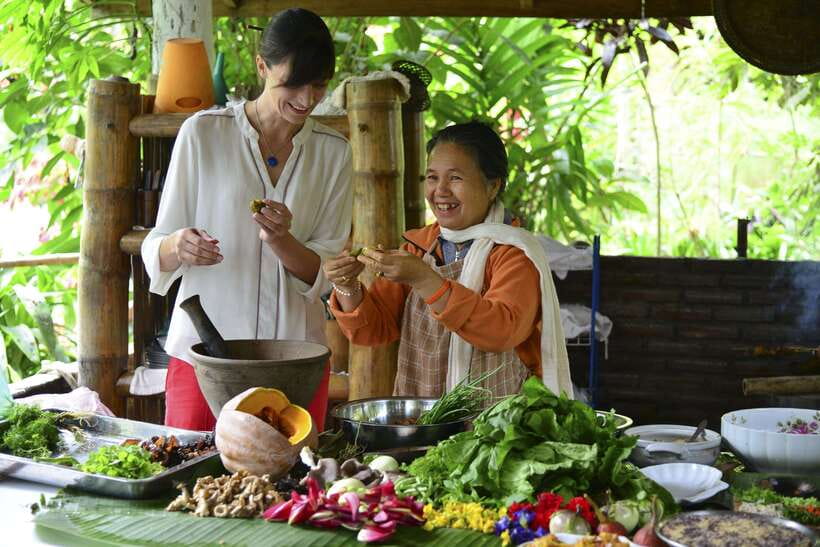
Luang Prabang’s morning market is the real beginning of this experience. With a local chef beside you, unfamiliar herbs, vegetables, fruit, and spices become useful ingredients rather than a blur of market color. You then cook and eat Lao food in a calm riverside setting at Alame Restaurant, connected with Victoria Xiengthong Palace.
I especially like the market-to-table format and the patient, friendly teaching style reported from chefs such as Noi, Noy, Nov, and Vannasone. I also like that the class gives you recipes to take home, not just a pleasant lunch. The main thing to consider is the gap between the market visit and the cooking: the chef may need about two hours to prepare ingredients, so this is not four straight hours of hands-on work.
Key points at a glance
- The morning market comes first: Visit local stalls with an English-speaking chef and learn what Lao ingredients are used for.
- Cooking takes place by the Mekong: Alame Restaurant offers a peaceful terrace setting near the former royal palace.
- You help prepare several dishes: Classes have included sticky rice, soup, laab, fresh appetizers, and coconut desserts.
- The market visit uses a bicycle or tuk tuk: The activity begins and ends near Victoria Xiengthong Palace, close to Wat Xiengthong.
- Small groups keep the class manageable: The maximum group size is 10 people, with vegetarian food available if requested ahead.
- The price is $45 per person: That covers market transport, the guided visit, cooking instruction, and lunch, but not drinks or a tip.
The Morning Market Gives the Class Its Context
The best part of a Lao cooking class is often not the stove. It is knowing what you are cooking with.
You begin at Victoria Xiengthong Palace on Kounxoau Road, in Ban Phonehueng, close to Wat Xiengthong. From there, the group reaches Luang Prabang’s morning market by bicycle or tuk tuk. The market visit lasts about an hour and is led by an English-speaking chef.
This is a useful way to see the market. You are not simply pointed toward piles of greens and asked to guess what they are. The chef explains the ingredients, how they are used, and which flavors matter in Lao cooking. You might also be offered small items to taste. One chef, Nov, was noted for buying a couple of things for the group to try, turning the market from a sightseeing stop into a short food lesson.
The market is a working place, not a polished food museum. You should expect close stalls, unfamiliar produce, and plenty to take in. That is part of its value, but it can also feel a little hair raising if you are not used to Southeast Asian markets. Wear comfortable shoes and bring the required hat, especially if the morning is sunny.
The bicycle or tuk tuk ride adds a local touch, but the exact choice may depend on the group and the arrangements that day. Drinks in the vehicle are not allowed, so finish any bottled drink before setting off.
More laos cooking classes in Luang Prabang:
- Luang Prabang: Evening Cooking Class & Local Baci Ceremony
★ 4.9 · 151 reviews - Luang Prabang: Bamboo Weaving Workshop & Cooking Class
★ 5.0 · 96 reviews - Tribal Cooking Class in Luang Prabang Forest and visit
★ 5.0 · 15 reviews
The Two-Hour Pause Is Worth Understanding
The advertised experience lasts four hours. The schedule breaks down into roughly one hour at the market, two hours for cooking, and one hour for lunch. Some descriptions also call the activity about three hours, so it is sensible to check the exact start time and expected finish when you book.
The most important timing detail comes after the market. The chef may need time to return to the kitchen and prepare ingredients before you begin cooking. During this pause, you can have coffee or visit nearby temples, cafes, and shops around Luang Prabang.
I see this in two ways. It gives you breathing room and keeps the class from feeling rushed. You can wander around the area rather than spend the entire morning standing at a worktable. But if you expect four continuous hours of cooking, you may find the wait disappointing.
One useful point is that the pause can be pleasant when you plan for it. Treat it as free time in the old town, not as part of the practical cooking lesson. If you want a fully hands-on class from the first minute to the last, ask how much preparation will be done before you arrive.
Cooking Lao Food at Alame Restaurant
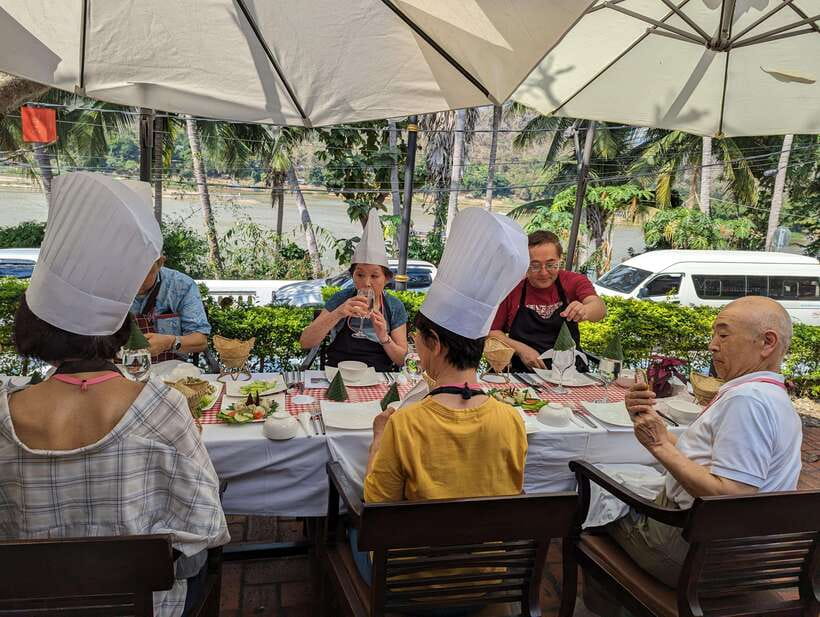
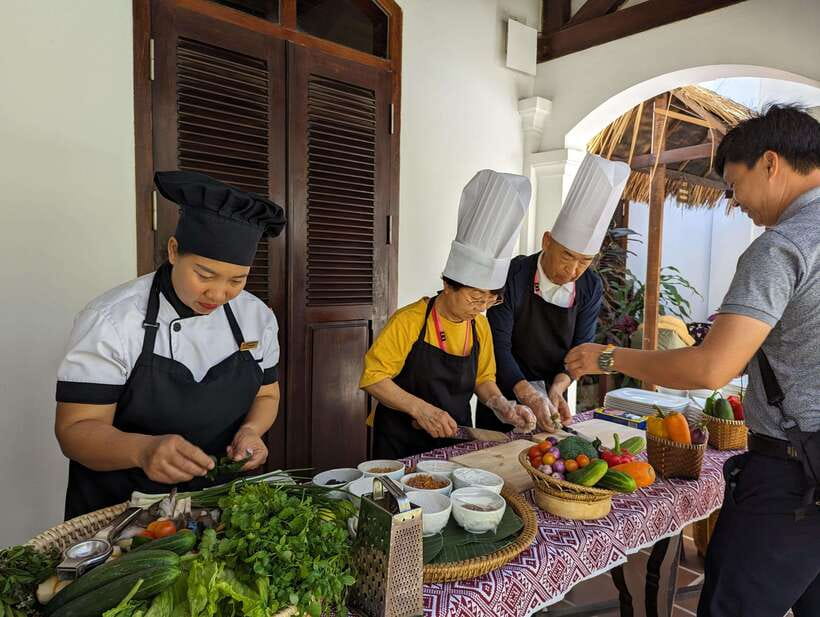
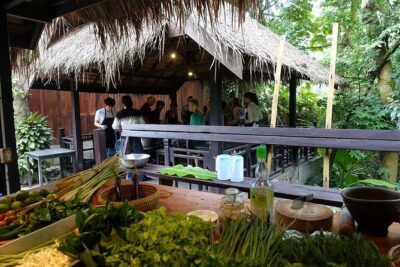
The cooking session takes place at Alame Restaurant, a peaceful riverside restaurant associated with Victoria Xiengthong Palace. The setting is one of the experience’s strongest features. You cook and later eat on a terrace with views toward the Mekong, while the palace and nearby temple area give the class a sense of place.
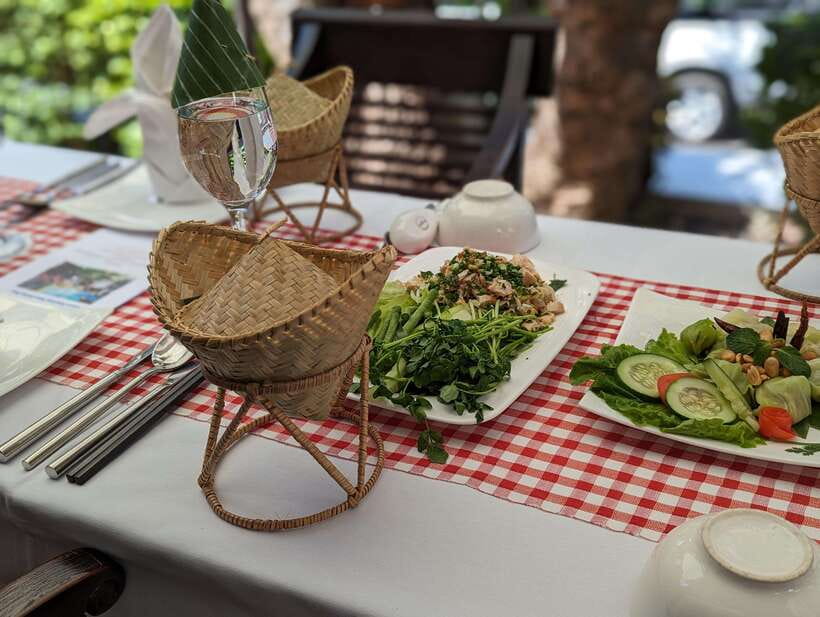
The exact menu can change. Past classes have included four dishes, while other sessions describe an appetizer followed by a three-course lunch. Dishes mentioned include sticky rice, fresh appetizers, sour soup with pork and mushrooms, chicken laab, salads, curries, and rice balls in coconut milk.
That variety matters. Lao food is not one-note hot or simply a version of neighboring Thai food. The class introduces several parts of a Lao meal: herbs and vegetables, a sour soup, a seasoned meat salad, sticky rice, and a sweet coconut finish. You get a broader picture of the cuisine than you would from preparing one recipe.
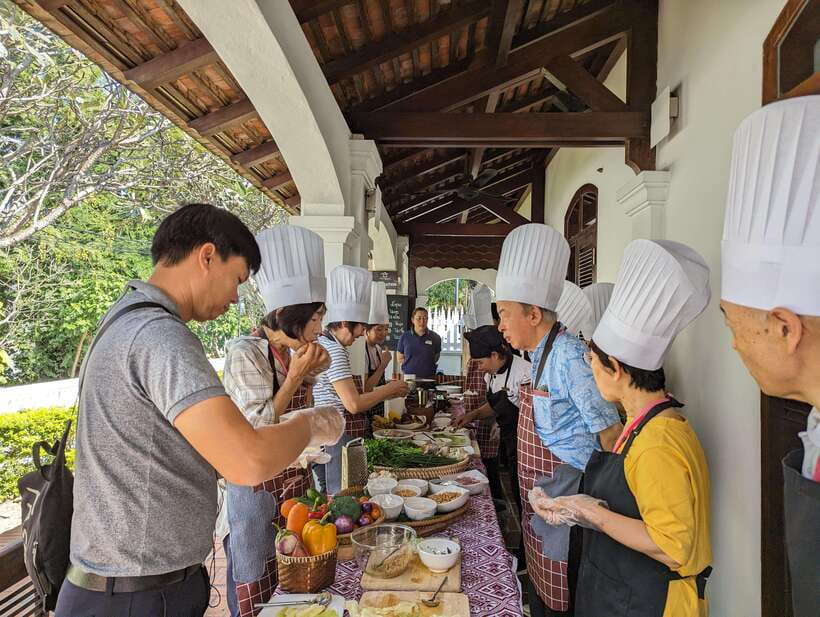
The class is hands-on, but you should not expect to cook every dish from start to finish alone. The group shares some of the preparation, and the chefs may complete work during the market break. In one account, each participant contributed to the dishes rather than making a separate full menu. That makes the class social and efficient, though it may be less satisfying if your main goal is detailed practice with every step.
The teaching style sounds relaxed and patient. Noi was praised for clear instructions, humor, and a willingness to let people work at their own pace. Another class led by Vannasone combined food advice with explanations of Lao traditions. These details matter more than fancy equipment. A good cooking class depends on a teacher who can explain unfamiliar ingredients without making beginners feel clumsy.
What You Actually Learn
You learn more here than a list of recipes.
At the market, you see the raw ingredients before they are cleaned and arranged for cooking. Back at the restaurant, the chef explains how they fit together. This link between market and kitchen helps you understand why Lao food uses so many fresh herbs, vegetables, sharp flavors, and contrasting textures.
Sticky rice is an especially useful lesson. It is a key part of Lao meals, and one class included the preparation process. Laab also gives you a practical look at Lao seasoning, herbs, vegetables, and the balance of savory and fresh flavors.
The class suits beginners. Instructions are given in English, and several chefs have been praised for explaining each step clearly. At the same time, experienced home cooks should not assume the class will be too basic. The market walk adds information about ingredients that even seasoned cooks may not recognize.
You should also tell the provider in advance if you need vegetarian food. Vegetarian options are available, but they need to be requested before the class. Do not wait until you sit down at the cooking station.
A few more Luang Prabang trips to weigh up
- Day-time Bamboo weaving & Cooking Classes join-in
★ 5.0 · 38 reviews - Evening Bamboo weaving & Cooking classes join-in
★ 5.0 · 17 reviews - Traditional Market Tour and Private Laotian Cooking Class with a Local
★ 5.0 · 13 reviews - The Namkhan – Cooking Class
★ 5.0 · 8 reviews
Lunch With a Mekong View
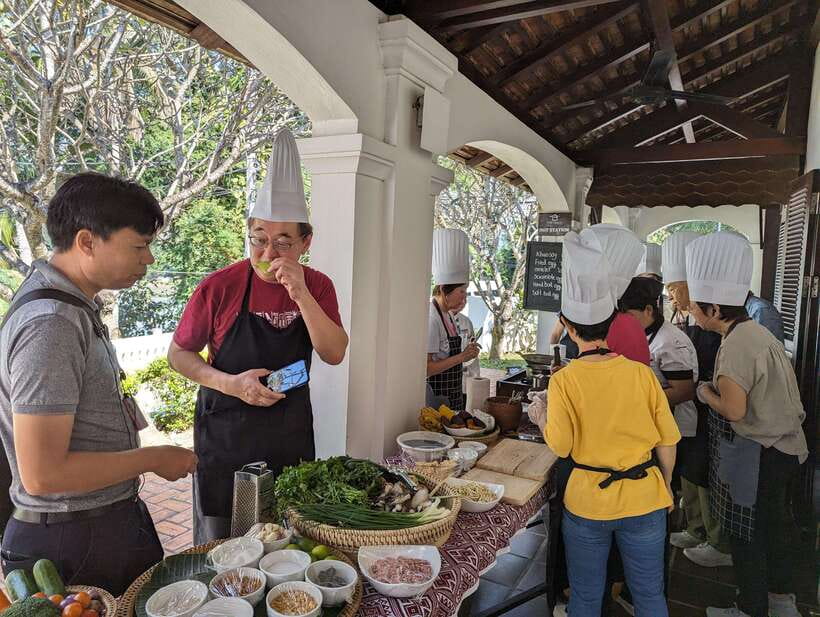
After the cooking, you eat the food you helped prepare. This is not a quick sample at the counter. The schedule allows about an hour for lunch, giving you time to sit on the terrace and enjoy the river setting.
I like this ending because it gives the class a clear reward. You see the ingredients at the market, work with them in the kitchen, and then taste the finished dishes in the same riverside setting. The view adds pleasure, but the meal also helps you judge the flavors and understand how the dishes work together.
The menu is group-prepared, so the experience depends partly on how the class is organized that day. You may have a role in several dishes rather than full control over one plate. For many people, that is a good trade: you taste more Lao food and avoid spending the whole lunch period eating only one dish.
Drinks are not included. Budget separately for them, and remember that tips are also excluded. The food and instruction are covered in the $45 price, but this is not an all-inclusive outing.
Is $45 a Fair Price?
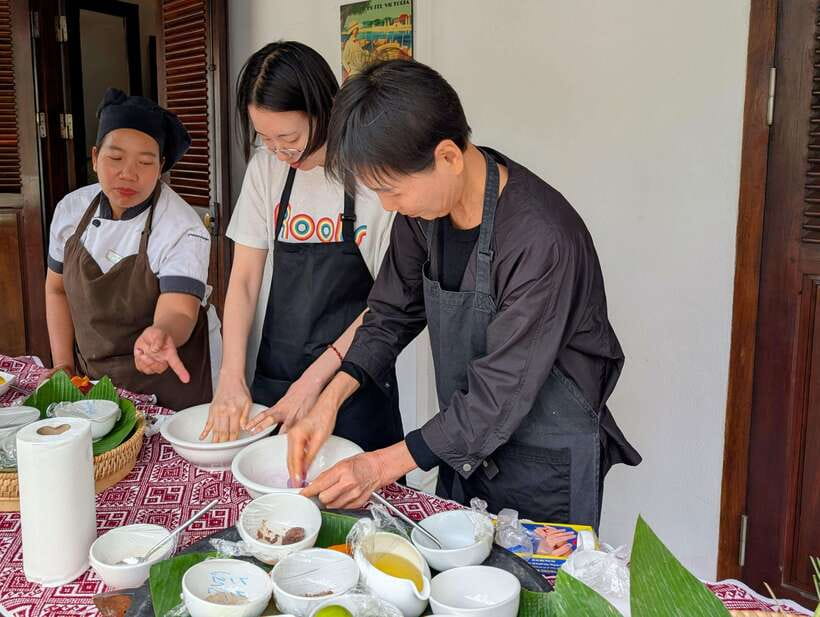
At $45 per person, this is not the cheapest way to eat in Luang Prabang. It is a fair price if you value the full package: local market transport, a guided ingredient tour, English-language instruction, several dishes, a riverside lunch, and recipes for later.
The setting also affects the value. You are not cooking in an anonymous classroom. The experience takes place at a heritage property near Wat Xiengthong, with a restaurant terrace overlooking the Mekong. That atmosphere is part of what you are paying for.
The value is weaker if you mainly want a nonstop lesson or a large amount of independent kitchen practice. The preparation break can take up about two hours, and some of the work may already be done before you return. In that case, a cheaper local food tour or a different class with continuous cooking may fit better.
For a first introduction to Lao cuisine, I think the combination makes sense. You get food, place, transport, instruction, and a meal in one half-day activity. The recipe book is another practical benefit, since you can try to recreate the dishes after leaving Laos.
Who Should Book This Class?
I would recommend it to anyone who wants more than restaurant meals but does not want a highly technical chef course. It is a particularly good choice if you enjoy markets, local food, and relaxed cultural activities.
It also suits couples, small groups, and solo visitors. The group limit is 10, and one person has even had a private session when no one else booked. Group size can affect how much time you get at the worktable, so a smaller class is a welcome possibility.
Families should read the restrictions carefully. The activity is not suitable for babies under one year, wheelchair users, or people over 95. You should be comfortable standing for extended periods, both at the market and during the cooking session.
Bring a hat and wear practical clothing. You may be moving between the market, the restaurant, and nearby streets, so shoes that handle walking are a better choice than formal footwear.
Free cancellation is available up to 24 hours before the activity for a full refund, and you can reserve now and pay later. Those terms help if your Luang Prabang schedule is still shifting, though you should still confirm the available start time.
The Main Strengths and Weak Spots
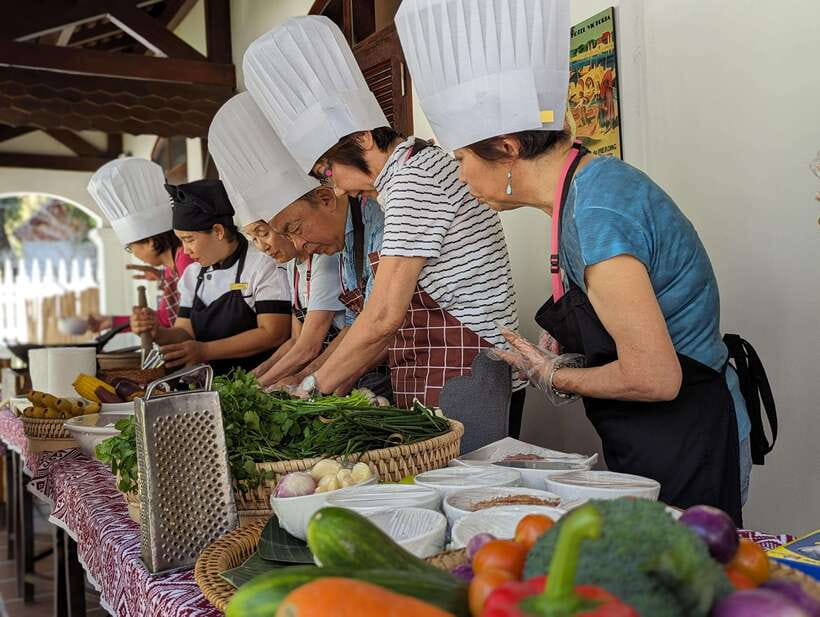
The strongest feature is the chef-led market visit. It gives meaning to the ingredients and adds a real local setting before the cooking begins.
The second strength is the setting at Alame Restaurant. A Mekong-facing terrace makes the lunch feel special without requiring another sightseeing stop.
The third is the teaching. Chefs including Noi, Noy, Nov, and Vannasone have been described as kind, funny, organized, patient, and clear. The names may vary by date, but the instruction is in English and the format is designed for participation.
The weak spot is the preparation gap. You may spend around two hours having coffee or exploring nearby temples and shops while the kitchen is readied. Some people will enjoy the pause. Others will wish the class offered more chopping, seasoning, and cooking under supervision.
The other limitation is shared participation. You may contribute to several dishes, but you are not guaranteed a full start-to-finish lesson for every recipe. Ask about this if detailed technique is your top priority.
Should You Book It?
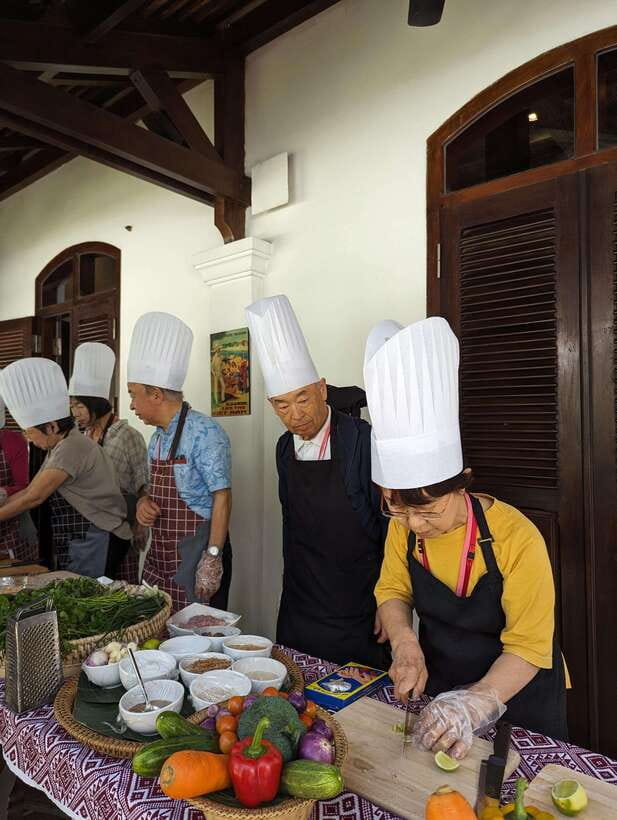
Book this experience if you want a friendly introduction to Lao food with a market visit, a scenic setting, and a meal you help prepare. At $45, it offers good value for a four-hour cultural outing, especially if you appreciate the Mekong terrace and the recipe book as much as the cooking itself.
Skip it if you want nonstop kitchen work or a private, highly technical lesson. For everyone else, this is a well-balanced way to spend a Luang Prabang morning, especially if you arrange a vegetarian menu in advance and plan something nearby during the preparation break.
FAQ
Where does the cooking class meet?
The meeting point is Victoria Xiengthong Palace on Kounxoau Road in Ban Phonehueng, near Wat Xiengthong Temple, Luang Prabang.
How long does the experience last?
The activity is advertised as four hours. The planned schedule includes about one hour at the market, two hours of cooking, and one hour for lunch. Some descriptions give the duration as approximately three hours, so confirm the exact timing when booking.
How do I reach the morning market?
The morning market visit includes transport by bicycle or tuk tuk from the starting location.
What language is the class taught in?
The instructor speaks English.
What food is included?
Lunch is included, and you eat the Lao dishes prepared during the class. Past menus have included soup, laab, appetizers, sticky rice, and coconut desserts, but the exact dishes can vary.
Are vegetarian options available?
Yes. Vegetarian options are available, but you should notify the provider in advance.
What is not included in the price?
Drinks and tips are not included. The $45 price covers the market tour, cooking class, and lunch.
More Workshops in Luang Prabang
- Luang Prabang: Hmong Batik Art Workshop
★ 5.0 · 27 reviews - Luang Prabang: Weaving Workshop Half-Day Experience
★ 5.0 · 9 reviews - Laos Cooking Class in Luang Prabang
★ 4.5 · 7 reviews - The Namkhan – Yoga Class (8 am or 4 pm)
★ 4.0 · 5 reviews
Just added around Luang Prabang
- The Namkhan – Yoga Class (8 am or 4 pm)★ 4.0 · 5 reviews
- Unwind with a Sunset Cruise on the Mekong River★ 5.0 · 4 reviews
- Private Tour: Half-Day City Tour of Luang Prabang★ 4.5 · 4 reviews
- Sunset Cruise in Luang Prabang with Live Performance★ 4.5 · 3 reviews
- Luang Prabang’s Beauty & Heritage in 1 Day – All-Inclusive Tour★ 5.0 · 6 reviews
- Luang Prabang Foodie Walking Tour and Monk Blessing★ 5.0 · 7 reviews
- Luang Prabang Night-time Explorer★ 3.5 · 3 reviews
- Laos Buffalo Dairy Tours Interact, Learn and Taste Fresh Flavors★ 5.0 · 6 reviews
Laos Cooking Classes, compared.
Tribal Cooking Class in Luang Prabang Forest and visit
Read our review →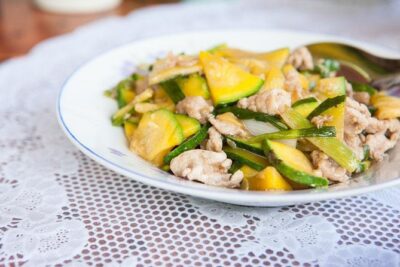
Traditional Market Tour and Private Laotian Cooking Class with a Local
Read our review →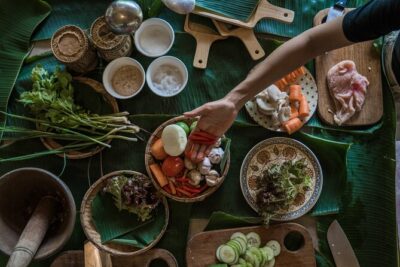
Full Day bamboo experience with cooking class & Kuang si waterfalls
Read our review →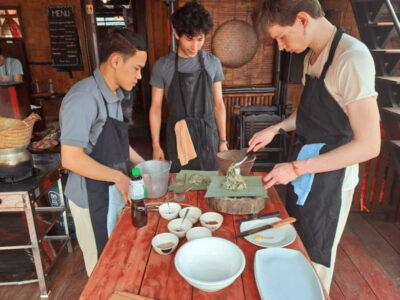
Browse the lists this tour appears in