
Reviewed · WORKSHOPS
Luang Prabang: Hmong Batik Art Workshop
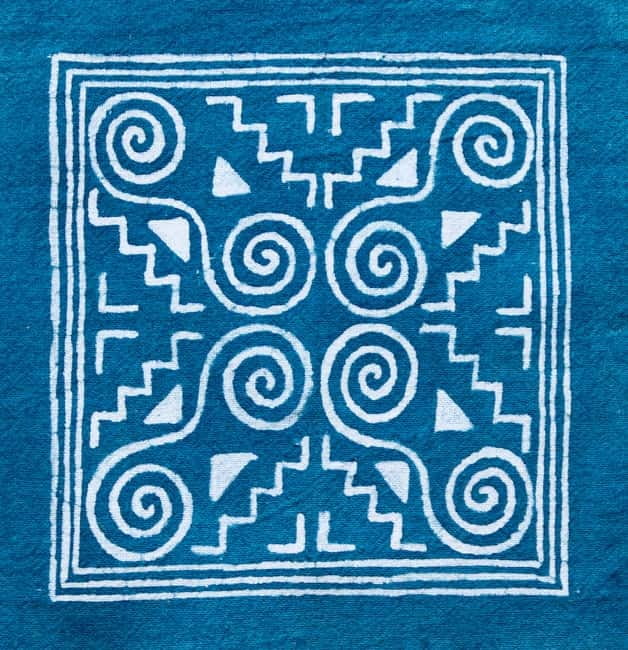
The most memorable part of this Luang Prabang activity is the transformation from a plain piece of Hmong hemp fabric into a blue-and-white design made by your own hand. You draw with warm natural beeswax, then watch indigo dye fill the fabric while the wax protects your pattern. The craft feels personal, not like another shop-bought souvenir.
I like two things especially: you work with traditional Hmong tools and symbols, and the activity welcomes beginners who may not think of themselves as artistic. The English-speaking instructors, including Mi or Mee, are patient and friendly. The one caution is practical: your finished piece is usually ready for pickup the next day, so this works best if you have at least two days in Luang Prabang.
Key points to know
- Draw on hand-loomed hemp: Your design goes onto high-quality Hmong hemp fabric rather than paper or a factory-made souvenir.
- Use natural beeswax: Wax lines protect your drawing during the indigo dyeing, creating the classic batik pattern.
- Learn Hmong symbols: The artist explains the meanings behind traditional motifs as you choose and adjust your design.
- Choose your time: Sessions last from one to four hours, with one hour suited to a quick introduction and longer sessions allowing more careful work.
- Collect it the next day: The artist continues the dyeing, boils away the wax, and dries the piece after your workshop.
- Find Moon Love Batik easily: The studio is next door to Wat Sibounheuang and appears on Google Maps under Moon Love Batik.
Why this small craft class suits Luang Prabang
Luang Prabang gives you plenty of temples, markets, and river views. This workshop offers a different kind of cultural experience: you sit down, slow your pace, and learn a living craft from a Hmong artist.
That change of rhythm matters. Batik is careful work. You follow lines, apply beeswax, and watch the pattern develop one small section at a time. It is a calm activity for a hot afternoon, a rainy morning, or a break from walking around town.
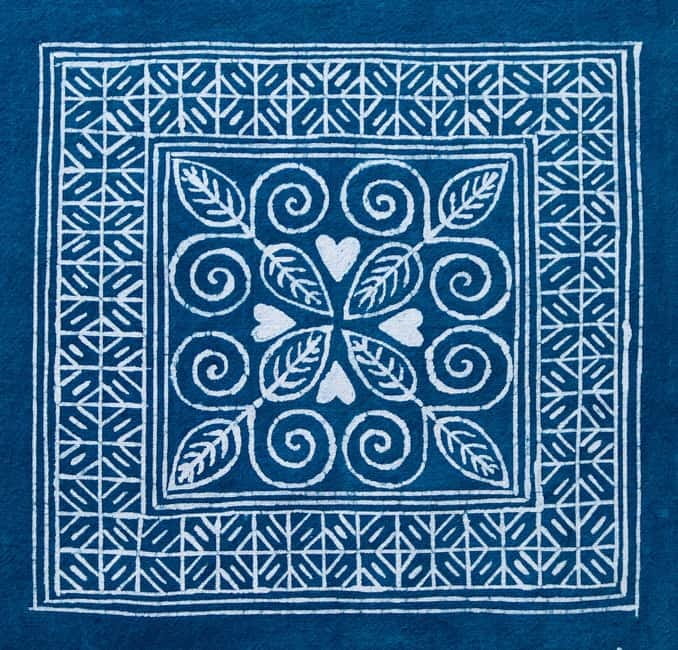
You do not need formal art skills. The instructor can provide motifs to follow, and you can make small changes so your piece is not simply a copy. One hour gives you a useful introduction, while two hours gives you more time to work carefully and add personal touches.
The workshop is also a better souvenir choice than buying another decorative object with no story attached. You make the pattern yourself, learn how it was produced, and take home a piece that recalls your time in Laos.
A few more Luang Prabang trips to weigh up
- Luang Prabang: Evening Cooking Class & Local Baci Ceremony
★ 4.9 · 151 reviews - Luang Prabang: Bamboo Weaving Workshop & Cooking Class
★ 5.0 · 96 reviews - Luang Prabang: Cooking Class at the Former Royal Palace
★ 4.9 · 51 reviews
Finding Moon Love Batik beside Wat Sibounheuang
The workshop takes place at Moon Love Batik in Luang Prabang Province, next door to Wat Sibounheuang. Search for Moon Love Batik on Google Maps before setting out. The location is also marked on Google Maps, which makes it easier to plan your walk.
The meeting point is worth noting because Luang Prabang has many small lanes and nearby temple names can sound similar. Save the map location before you leave your hotel, especially if you are booking an early session or arriving without mobile data.
No separate transport is included in the activity details, so plan to make your own way to the studio. The useful part is that the workshop fits easily into a day in town. You can schedule it around temple visits, the morning market, or an evening meal.
Choosing between one, two, and four hours
The listed duration ranges from one to four hours. You check the available start times when booking, and the right length depends on how much time you want to spend on your design.
A one-hour session is the quick, friendly introduction. You learn the basic method, follow a design, and leave with a piece to collect after the dyeing is complete. This is a good choice if you have a packed schedule or want one hands-on activity without giving up half a day.
The one-hour format can still feel satisfying. The process is approachable, and you do not need to arrive with an artistic plan. You can simply choose a motif and let the instructor show you how to work with the tools.
A two-hour session gives you more breathing room. You can study several motifs, make small adjustments, and spend longer on the beeswax lines. This is likely the best middle option for most people because it allows a more individual design without demanding a long commitment.
The four-hour option suits anyone who wants to take the craft more seriously. You have time to work slowly and ask more questions about the process and symbols. If you enjoy making things by hand, the longer session gives the activity room to become the main event rather than a short stop between sightseeing plans.
The final dyeing and finishing happen after your drawing session. The artist continues the indigo process to build a deeper blue, then boils away the wax. Because of this, the workshop itself is not the entire production process. You pick up the finished piece the following day.
Drawing Hmong symbols with beeswax
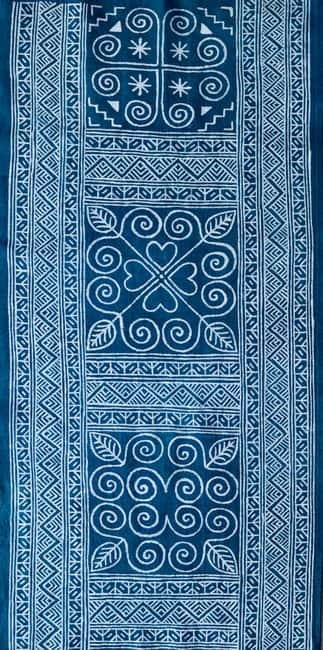
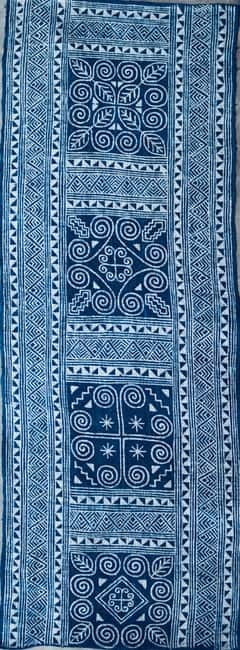
The workshop begins with instruction from a master Hmong batik artist. You learn about traditional Hmong symbols and choose the type of pattern you want to create.
The symbol lesson gives the activity more meaning than a basic craft class. Instead of making random lines, you begin to understand that the designs come from Hmong artistic traditions. The instructor helps you work with the patterns, and you can make modest changes to create something more personal.
You draw onto high-quality, hand-loomed Hmong hemp fabric using traditional batik tools and natural beeswax. The wax creates lines that resist the dye. Wherever the wax remains, the indigo cannot color the fabric in the same way.
This is the stage where patience helps. You need to follow the pattern and keep the wax lines clear. The activity is not presented as a test of drawing ability, and beginners can manage it by following the guide’s demonstrations.
The work has a gentle, almost meditative quality. You are not racing through a list of stops. You are concentrating on the next line, asking questions, and learning by doing. That makes the class a good fit for couples, solo visitors, and anyone who wants a quieter cultural activity.
Same river towns, a completely different day out:
- Luang Prabang: Cruise to Pak Ou Caves & Kuang Si Waterfalls
★ 5.0 · 1,769 reviews - Luang Prabang: Cruise to Pak Ou Caves & Kuang Si Waterfalls
★ 4.8 · 1,360 reviews - Half Day Mekong Cruise to Pak Ou Caves (Morning / Afternoon)
★ 4.6 · 290 reviews - Luang Prabang: UNESCO World Heritage City Highlights Tour
★ 4.6 · 201 reviews
The natural indigo dye process
After you finish the drawing, the fabric goes into the natural indigo dye process. This is the point where your pale design begins to change.
The indigo creates the familiar blue color, while the wax protects the lines you have drawn. The artist continues the process to produce a deeper blue, so the final result is not necessarily visible when your scheduled session ends.
The waiting period is important to understand before you book. You can take part in the drawing and dyeing, but the artist completes the later stages. You pick up the piece the next day once it has been dried and finished.
That delay is not a problem if you are staying in Luang Prabang for another night. It is a serious consideration if you are leaving town immediately after the workshop. Plan the activity early enough in your visit, or confirm your travel schedule before booking.
The final reveal comes when the wax is boiled away. The protected sections show the design you created, now set against the indigo blue. This gives the souvenir a satisfying before-and-after quality. You remember the pale fabric, the careful wax drawing, and then see the finished pattern in its stronger color.
What you take home from the workshop
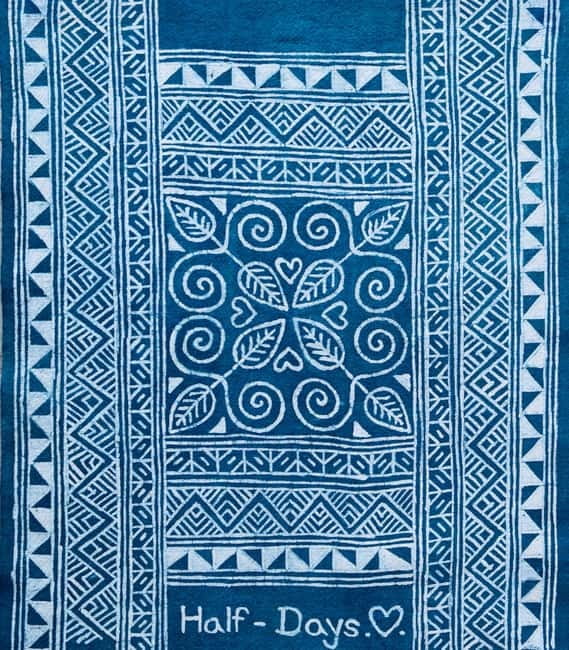
The completed batik art piece is included in the $22 price. You can hang it on a wall as a small piece of textile art or use it in a sewing project.
The suggested uses include a pillow cover or tote bag. The studio provides the batik piece itself, so any later sewing or framing is up to you. That flexibility is useful because you can decide at home how practical or decorative you want the souvenir to be.
I like this kind of keepsake because it remains connected to the place where you made it. You are not just buying Hmong fabric at a market. You are learning the technique, hearing about the symbols, and leaving your own mark on the cloth.
The result will not look machine-perfect, and that is part of its appeal. Small variations show where your hand worked the wax. If you want a flawless professional textile, buy a finished piece from an artisan shop. If you want something with your own fingerprints in the story, this class offers better value.
How the $22 price measures up
At $22 per person, the workshop is reasonably priced for an activity that includes instruction, materials, the hemp fabric, natural indigo dyeing, and the completed piece.
The value is strongest when you treat it as both a class and a souvenir. You are paying for time with a master Hmong batik artist, not simply for a square of dyed fabric. The instruction also means you leave with some understanding of why the pattern looks the way it does.
A one-hour booking gives you a low-cost way to try a traditional craft. A longer session may offer better value if you enjoy hands-on work, because you have more time to make adjustments and ask about the process.
The price does not include turning the textile into a finished pillow cover or tote bag. You receive the completed batik art piece, then choose what to do with it. Keep that distinction in mind if you want a ready-to-use item rather than fabric for a later project.
The English-speaking instructors and the mood of the class
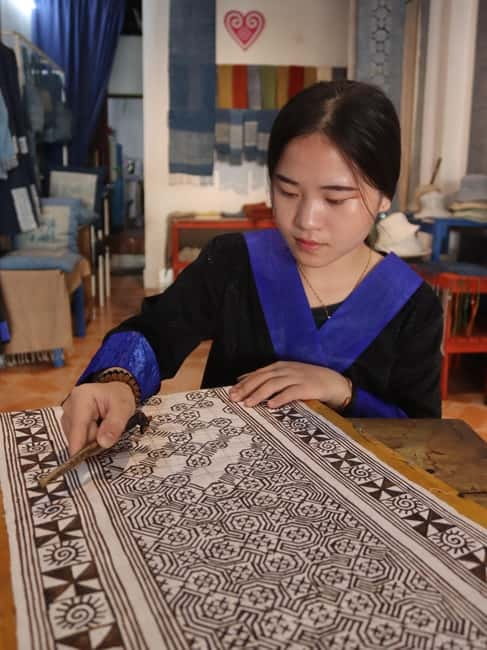
Instruction is offered in English. Mi and Mee are names associated with the teaching, and the experience is built around patient, personal guidance rather than a formal lecture.
That matters for a craft activity. You need clear help with the tools, the wax, and the pattern. The instructors can explain the steps, answer questions, and help you correct small mistakes without making the class feel intimidating.
The teaching style is friendly and relaxed. You can chat about life in Luang Prabang while working, or focus quietly on the design. The activity has enough structure to keep you moving, but not so much that it feels like school.
Couples can make separate pieces and compare the finished designs. Solo visitors can join the same creative setting without needing special experience. People who are unsure about crafts should not be put off. The method is based on following lines and learning the tool, not producing a gallery-quality drawing from scratch.
Who should book this experience
I would recommend the workshop to anyone who likes local crafts, textile traditions, or souvenirs with a personal story. It is also a smart choice if you have already seen several temples and want a cultural activity that uses your hands.
It suits:
- First-time crafters who want clear instruction
- Couples who want to make matching or contrasting pieces
- Solo visitors looking for a calm activity
- Families with children old enough to work carefully with the materials
- Anyone staying long enough to collect the piece the next day
Children under six are not suitable for the activity. Older children may enjoy it, but the supplied information does not specify a particular child age range or special children’s program, so parents should use their judgment.
You should also consider your departure date. If you leave Luang Prabang the same day, you may not be able to collect the finished work. The next-day pickup is one of the most important planning details.
The studio is wheelchair accessible, which makes the workshop an option for visitors who need an accessible activity. The listing does not give further details about the exact layout or restroom facilities, so contact the provider if you need specific arrangements.
Booking, cancellation, and practical planning
You can reserve now and pay later, which helps if your Luang Prabang schedule is still changing. Free cancellation is available up to 24 hours in advance for a full refund.
The available start times depend on the date you choose. Since the class can last from one to four hours, check the session length before confirming. A longer booking needs space in your sightseeing plan, while a one-hour session can fit more easily between other activities.
Bring a little patience and a willingness to follow instructions. The main challenge is not physical effort. It is keeping your attention on the pattern and accepting that hand-drawn work will have small variations.
Wear something you can relax in during a craft activity. The provided information does not state a specific dress requirement, but working with dye and wax is a reason to avoid your most precious clothing.
Should you book the Hmong Batik Art Workshop?
Book it if you want a quiet, hands-on introduction to Hmong culture and a souvenir you helped create. The combination of traditional symbols, beeswax drawing, hand-loomed hemp, and natural indigo gives the activity real substance for a modest price.
Choose the two-hour option if you want a good balance of instruction and creative time. Pick one hour if your schedule is tight. Go longer if the making matters as much to you as the sightseeing.
Skip it only if you are leaving Luang Prabang before the next-day pickup, dislike careful craft work, or want a finished item that needs no later sewing or framing. For everyone else, Moon Love Batik offers a friendly way to slow down and take home something more meaningful than a standard souvenir.
FAQ
Where does the Hmong batik workshop take place?
It takes place at Moon Love Batik in Luang Prabang, next door to Wat Sibounheuang. You can find the studio on Google Maps by searching for Moon Love Batik.
How much does the workshop cost?
The price is $22 per person.
How long does the activity last?
The duration ranges from one to four hours. Available starting times and session lengths should be checked when booking.
Can beginners take part?
Yes. The activity is suitable for beginners, and you follow designs and receive guidance from the instructor. No special artistic skill is required.
What materials are included?
The workshop includes traditional batik tools and materials, natural beeswax, high-quality hand-loomed Hmong hemp fabric, and the natural indigo dyeing process.
Can I take my finished artwork home?
Yes. A completed batik art piece is included. You can use it in a sewing project, such as a pillow cover or tote bag, or hang it on a wall.
When can I collect the finished piece?
You can pick it up the day after the dyeing session, once the artist has completed the deeper dyeing, removed the wax, and dried the fabric.
Is the workshop taught in English?
Yes. The instructor language is English.
Is the activity wheelchair accessible?
Yes, the activity is listed as wheelchair accessible.
Can children under six join?
No. The activity is not suitable for children under six.
Just added around Luang Prabang
- The Namkhan – Yoga Class (8 am or 4 pm)★ 4.0 · 5 reviews
- Sunset Cruise in Luang Prabang with Live Performance★ 4.5 · 3 reviews
- Unwind with a Sunset Cruise on the Mekong River★ 5.0 · 4 reviews
- Private Tour: Half-Day City Tour of Luang Prabang★ 4.5 · 4 reviews
- Luang Prabang Night-time Explorer★ 3.5 · 3 reviews
- Luang Prabang’s Beauty & Heritage in 1 Day – All-Inclusive Tour★ 5.0 · 6 reviews
- Luang Prabang Foodie Walking Tour and Monk Blessing★ 5.0 · 7 reviews
- Laos Buffalo Dairy Tours Interact, Learn and Taste Fresh Flavors★ 5.0 · 6 reviews
Workshops, compared.
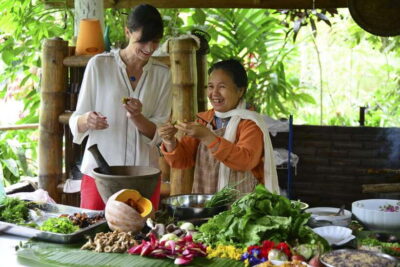
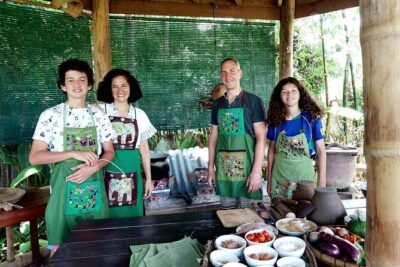
Day-time Bamboo weaving & Cooking Classes join-in
Read our review →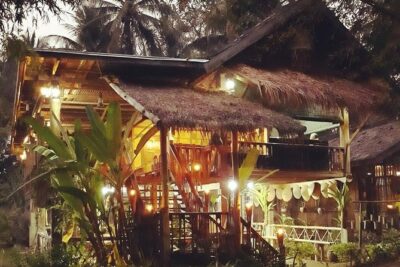
Evening Bamboo weaving & Cooking classes join-in
Read our review →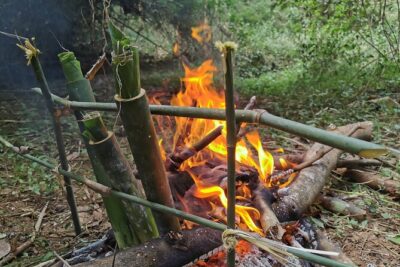
Tribal Cooking Class in Luang Prabang Forest and visit
Read our review →
Traditional Market Tour and Private Laotian Cooking Class with a Local
Read our review →
Browse the lists this tour appears in